
Custom caps are more than just a practical accessory. For businesses, fashion labels, sports teams, clubs, organisations, events, and individuals, a well-designed cap can become a powerful way to showcase identity and make a lasting impression. But when it comes to customising your caps, one important question often comes up: Should you choose patches or embroidery?
Both options can transform an ordinary cap into a distinctive piece of branded headwear. However, they create very different visual effects and offer their own advantages in terms of design, texture, durability, flexibility, and overall style.
If you are planning to create custom caps for your business, clothing brand, team, event, or promotional campaign, understanding the difference between patches and embroidery can help you make a confident decision.
At Custom Cap UK, we understand that every project is different. Some customers want a clean and professional embroidered logo, while others prefer the bold texture and versatility of a custom patch. The right choice ultimately depends on your design, cap style, intended use, budget, and the impression you want your headwear to create.
In this guide, we will compare patches vs embroidery on caps, explore the strengths and limitations of both methods, and help you decide which customisation technique is right for your next cap project.
What Is Embroidery on a Cap?
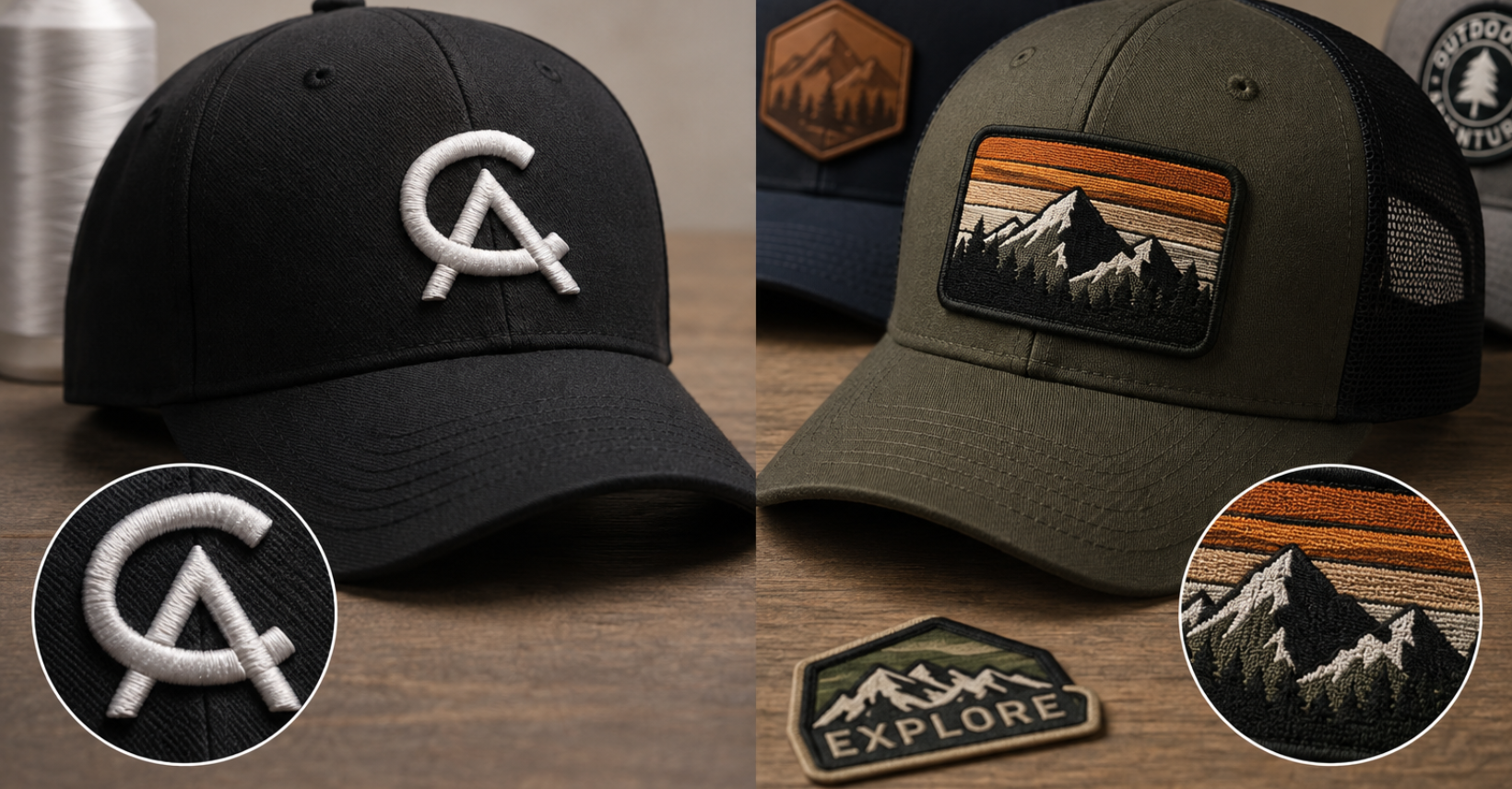
Embroidery is one of the most traditional and recognisable ways to customise headwear. Instead of attaching a separate decorative piece to the cap, the design is stitched directly into the fabric using specialised embroidery machinery and coloured threads.
The result is a textured, professional finish that gives logos and artwork a premium appearance. Embroidery is particularly popular for company uniforms, sports teams, workwear, promotional caps, fashion collections, and branded merchandise.
At Custom Cap UK, embroidery can be used across different cap styles, including baseball caps, snapbacks, trucker caps, dad caps, fitted caps, and other custom headwear options. Depending on the design, customers can also explore options such as flat embroidery, 3D puff embroidery, multi-colour embroidery, and different logo placements.
The popularity of embroidery comes from its ability to create a timeless look. A simple embroidered logo can make a cap appear professional without being overly complicated.
For businesses, this can be especially useful. A clean embroidered logo on the front of a cap can create a consistent appearance across staff uniforms, promotional merchandise, and corporate clothing.
What Is a Custom Patch on a Cap?
A custom patch is a separate piece of material that is designed with a logo, artwork, text, or graphic and then attached to the cap.
Depending on the desired look, patches can be produced using different materials and techniques. Common options include:
- Embroidered patches
- Woven patches
- PVC patches
- Leather patches
- Printed patches
- Combination patches
Each patch style creates a different visual effect.
For example, an embroidered patch can provide a traditional textured appearance, while a woven patch is often better suited to fine details and smaller lettering. Leather patches can create a premium, rugged aesthetic, while PVC patches offer a modern, durable, three-dimensional appearance.
One of the biggest advantages of patches is flexibility. Because the design is created separately from the cap itself, manufacturers can produce detailed artwork and then apply the finished patch to different cap styles.
This makes patches particularly appealing to fashion brands, streetwear labels, outdoor companies, lifestyle brands, sports groups, and businesses looking for a more distinctive visual identity.
Patches vs Embroidery: The Main Difference
The simplest way to understand the difference is this:
Embroidery is stitched directly onto the cap, while a patch is produced separately and then attached to the cap.
This fundamental difference affects the final appearance, texture, design possibilities, and production process.
Embroidery tends to create a classic, integrated appearance. The logo becomes part of the cap itself, creating a clean and professional finish.
Patches, on the other hand, create a more defined visual separation between the cap and the design. The patch can have its own border, backing, texture, shape, and material.
Neither option is automatically better than the other. The best choice depends on what you want your finished caps to communicate.
If your priority is a traditional branded appearance, embroidery may be ideal. If you want more flexibility and a unique visual identity, a custom patch could be the better solution.
Embroidery on Caps: Key Advantages
1. A Professional and Premium Appearance
One of the biggest reasons brands choose embroidery is its professional appearance.
A carefully stitched logo can instantly give a cap a polished look. This makes embroidered caps particularly popular among businesses, corporate teams, hospitality companies, sports organisations, schools, and workwear brands.
A simple logo embroidered on the front of a structured baseball cap can look clean and sophisticated. The raised texture of the thread also creates a subtle three-dimensional effect that can make branding more noticeable.
For businesses that want their employees to present a consistent and professional image, embroidered caps can be an excellent choice.
2. Excellent Durability
Embroidery is well known for its durability.
Because the design is stitched directly into the fabric, there is no separate patch that needs to be attached. High-quality embroidery can withstand regular use and is suitable for caps that will be worn frequently.
This makes embroidered caps a practical option for:
- Staff uniforms
- Sports teams
- Outdoor businesses
- Promotional campaigns
- Workwear
- Events
- Everyday fashion
With proper care, quality embroidered branding can maintain its appearance over a long period of time.
3. A Timeless Design
Fashion trends change, but embroidery has remained a popular method of customising caps for decades.
A classic embroidered logo rarely looks outdated. Whether you are creating caps for a new startup or an established company, embroidery can provide a timeless appearance.
This is one reason why embroidered baseball caps continue to be popular among businesses and clothing brands.
4. Great for Simple Logos
Embroidery works particularly well when your logo has a relatively simple design.
Bold lettering, symbols, initials, and uncomplicated graphics can often translate beautifully into embroidery.
For example, a brand with a simple one-colour logo may achieve an excellent result with flat embroidery. A fashion label with bold lettering might choose 3D puff embroidery to create additional depth and visual impact.
The key is to ensure that the artwork is suitable for stitching. Very small details and extremely fine text may need to be adjusted before production.
5. Multiple Embroidery Styles
Embroidery is not limited to one look.
Depending on your brand and design, you can explore different techniques.
Flat embroidery provides a traditional and clean finish.
3D puff embroidery adds raised dimension and is particularly effective for bold lettering and logos.
Multi-colour embroidery allows brands to incorporate several thread colours.
Metallic thread embroidery can create a premium appearance for selected designs.
You can also customise different areas of the cap, including the front, side, and back, depending on the cap style and design.
This variety allows embroidery to work for both understated branding and more attention-grabbing designs.
Potential Limitations of Embroidery
Although embroidery is an excellent choice for many designs, it is not perfect for every situation.
Very detailed artwork can be difficult to reproduce accurately with thread. Tiny lettering, intricate gradients, photographic images, and extremely fine lines may not translate well into traditional embroidery.
The number of stitches can also influence production complexity and cost.
This is why professional artwork preparation is important. Before production begins, your design may need to be digitised or adjusted to ensure the best possible result.
At Custom Cap UK, customers can receive design assistance and digital proofs before production, helping ensure that the chosen artwork and layout are suitable for the final cap.
Custom Patches on Caps: Key Advantages
1. Greater Design Flexibility
One of the biggest benefits of patches is the freedom they provide.
A patch can be produced in almost any shape, depending on the design. You can create circular patches, rectangular patches, shield-shaped designs, custom silhouettes, and more.
This can make your cap branding feel more distinctive.
Instead of simply stitching a logo directly onto the fabric, you can create a complete visual badge with a border, background, text, and artwork.
For brands that want their caps to have a strong identity, this can be a major advantage.
2. Ideal for Detailed Designs
Patches can sometimes be better suited to artwork that contains more detail than traditional embroidery can comfortably reproduce.
Woven patches, for example, can provide a smooth surface that allows for finer details and smaller elements.
Printed patches can also offer additional flexibility for complex artwork, while PVC patches are useful when you want a bold, modern appearance.
The important point is that “patches” are not one single customisation method. Different patch materials produce different results.
Your choice should therefore be based on the artwork and the look you want to achieve.
3. Strong Visual Impact
A patch can make a cap immediately stand out.
The contrast between the patch and the cap fabric creates a defined focal point, making the branding easy to notice.
For streetwear brands and fashion labels, this can be particularly valuable. A custom patch can become part of the overall design rather than simply functioning as a logo.
For example, a black cap with a contrasting leather patch can create a premium and understated appearance. A colourful embroidered patch on a vintage-style cap can produce a more casual and creative aesthetic.
4. Multiple Materials to Choose From
Patches offer a wide range of material choices.
Embroidered patches provide a textured and traditional appearance.
Woven patches offer a cleaner surface and can be suitable for more detailed artwork.
Leather patches create a premium, rugged, or heritage-inspired look.
PVC patches provide a modern, bold, and durable finish.
This variety gives brands greater creative control over their caps.
At Custom Cap UK, custom patch applications are available alongside embroidery, giving customers more ways to create headwear that matches their brand identity.
5. Great for Fashion and Streetwear Brands
Patches have become particularly popular in fashion and streetwear.
A custom patch can make a cap feel more like a designed fashion product rather than promotional merchandise.
This is especially useful for brands launching limited-edition collections or creating merchandise drops.
A well-designed patch can also become a recognisable part of your brand identity. Customers may begin to associate the shape, material, or style of your patch with your clothing label.
For smaller brands looking to establish a unique visual language, this can be extremely valuable.
Potential Limitations of Patches
Patches also have some considerations to keep in mind.
The final appearance depends heavily on the quality of the patch and how professionally it is applied. Poor-quality patches or weak attachment methods can affect the overall finish.
The patch material may also influence the feel and weight of the cap.
For example, a large, heavy patch may not be suitable for every lightweight cap. The design should be balanced with the structure and material of the headwear.
It is also important to choose the right patch type. A design that works beautifully as leather may not have the same impact when produced as PVC or woven material.
Professional guidance can help you select the right combination.
Patches vs Embroidery: Which Looks More Premium?
The answer depends on the style of your brand.
Embroidery often creates a premium look through craftsmanship. The texture of the stitching and the precision of the thread can make even a simple logo appear sophisticated.
Patches create premium appeal in a different way. The use of leather, high-quality woven materials, custom shapes, or specialised finishes can turn a logo into a distinctive design feature.
If you want a classic corporate or professional appearance, embroidery may be the better option.
If you want a fashion-forward, creative, or distinctive appearance, a custom patch may be more suitable.
For some brands, combining both approaches can create the strongest result.
For example, you might use a large embroidered logo on the front and a small woven patch on the side. Alternatively, you could use a leather patch on the front and subtle embroidery at the back.
The possibilities are flexible.
Which Option Is More Durable?
Both high-quality embroidery and professionally applied patches can be durable.
However, their durability works differently.
With embroidery, the design is integrated directly into the cap fabric. There is no separate patch layer, which can make the finish particularly practical for everyday wear.
With patches, durability depends on the material and application method. A well-made patch that is securely attached can provide excellent long-term performance.
For caps that will be exposed to demanding conditions, such as outdoor work or frequent use, the choice of material becomes particularly important.
PVC patches, for example, can offer a highly durable option, while leather patches may develop a distinctive appearance over time.
The best approach is to consider the environment in which your caps will be worn.
Which Is Better for Company Branding?
For corporate branding, embroidery is often the first choice.
A company logo embroidered onto a cap can create a professional and consistent appearance. It works particularly well for staff uniforms, trade shows, promotional campaigns, hospitality businesses, construction companies, and service teams.
The clean appearance of embroidery can help reinforce brand professionalism.
However, patches can also work extremely well for businesses that want something more distinctive.
Outdoor companies, breweries, automotive brands, lifestyle businesses, and creative organisations may prefer patches because they can create a more relaxed and memorable visual identity.
Ultimately, the question is not simply whether patches or embroidery are better. It is about which method better represents your brand.
Which Is Better for Fashion Brands?
Fashion brands have more freedom to experiment.
Embroidery is excellent for minimalist logos, monograms, bold lettering, and clean branding.
Patches are ideal when you want to make the cap itself feel like a statement piece.
For example, a streetwear brand might use a large custom woven patch on a 5-panel cap. A heritage-inspired clothing brand might choose a leather patch on a structured baseball cap. A modern lifestyle brand could use a small PVC patch for a contemporary finish.
The cap style also matters.
A 5-panel cap provides a clean front panel that can be excellent for bold branding and patch applications. Snapbacks can support larger statement designs, while dad caps often suit smaller embroidered logos or relaxed patch designs.
At Custom Cap UK, a range of cap styles can be customised with different branding methods, allowing brands to select a combination that suits their collection.
Patches vs Embroidery: Which Is Better for Small Logos?
For smaller logos, embroidery can be a strong choice if the artwork is simple enough to stitch clearly.
Small logos featuring bold shapes or initials can look excellent when embroidered.
However, if your small logo contains very fine details or tiny text, a woven patch may offer greater clarity.
The important factor is not only the size of the logo but also the complexity of the artwork.
A small, simple logo can work well with embroidery.
A small, highly detailed logo may need a different solution.
This is why it is helpful to have your artwork professionally reviewed before production.
Patches vs Embroidery: Which Is More Cost-Effective?
The cost of custom caps depends on several factors, so there is no universal answer.
The total price may be influenced by:
- Number of caps ordered
- Cap style
- Material
- Design complexity
- Number of colours
- Embroidery size
- Stitch count
- Patch material
- Patch size
- Number of decoration locations
- Production quantity
For larger orders, economies of scale can influence the overall cost per cap.
If you are comparing options, it is best to request a quote based on your exact design rather than assuming one method will always be cheaper.
At Custom Cap UK, customers can discuss their project, share artwork, and receive guidance on the most suitable customisation method for their requirements.
Which Is Better for Promotional Caps?
Promotional caps need to be visible, memorable, and practical.
Embroidery is an excellent choice when your primary goal is to display a company logo clearly.
For example, a business attending a trade show might order branded baseball caps with an embroidered logo. The clean finish can help create a professional appearance while increasing brand visibility.
Patches can be more suitable for promotional campaigns where creativity and visual impact are priorities.
A custom patch can turn a promotional cap into something people actually want to keep wearing after the event.
This is an important consideration.
The best promotional product is not necessarily the one that is worn once. It is the one that becomes part of someone’s regular wardrobe.
A stylish custom cap with a well-designed patch or embroidered logo can continue promoting your brand long after an event has finished.
Which Customisation Should You Choose?
Here is a simple comparison:
| Feature | Embroidery | Patches |
|---|---|---|
| Professional appearance | Excellent | Excellent |
| Traditional style | Excellent | Very good |
| Design flexibility | Good | Excellent |
| Simple logos | Excellent | Excellent |
| Fine details | Limited by stitch size | Woven patches can work well |
| Texture | Raised thread | Depends on patch material |
| Fashion branding | Excellent | Excellent |
| Corporate branding | Excellent | Very good |
| Streetwear | Excellent | Excellent |
| Material options | Thread-based | Embroidered, woven, leather, PVC, printed |
| Custom shapes | Limited | Excellent |
| Direct integration | Yes | No |
| Visual impact | High | High |
| Best for minimalist logos | Yes | Yes |
| Best for statement designs | Yes | Yes |
This comparison shows why there is no single winner.
Both options can deliver excellent results when matched with the right design and purpose.
When Should You Choose Embroidery?
Embroidery is probably the right choice if:
- You want a clean and professional logo.
- Your artwork is relatively simple.
- You are creating staff uniforms.
- You need branded corporate caps.
- You want a timeless appearance.
- You are creating sports team caps.
- You prefer the logo to become part of the cap itself.
- You want a traditional premium finish.
- You are creating caps for regular everyday use.
Embroidery is particularly effective when your brand identity relies on simplicity.
A well-designed embroidered logo does not need to be complicated to make an impact.
Sometimes, a simple logo stitched accurately onto a high-quality cap can communicate more effectively than an overly complex design.
When Should You Choose Patches?
A custom patch may be the better choice if:
- You want a distinctive fashion aesthetic.
- Your logo requires more design flexibility.
- You want a custom shape.
- You prefer a separate badge-style design.
- You want to experiment with different materials.
- You are launching a streetwear collection.
- You want a leather, PVC, or woven finish.
- Your design includes details that may not work well with embroidery.
- You want the branding to become a major design feature.
Patches are particularly effective when the cap is intended to feel like a fashion product rather than simply branded merchandise.
Can You Combine Patches and Embroidery?
Absolutely.
In fact, combining different decoration methods can create some of the most interesting custom caps.
For example, you could create:
- A front embroidered logo with side embroidery.
- A leather front patch with a small embroidered back logo.
- A woven patch on the front with embroidered initials on the side.
- A PVC patch with subtle embroidery on the rear.
- A large embroidered design combined with a small custom patch.
Combining techniques allows you to create multiple branding points without making the cap look repetitive.
However, balance is important.
Too many logos or decoration methods can make a cap look crowded. The strongest designs usually have one primary focal point and one or two supporting elements.
Choosing the Right Cap for Your Customisation
The cap itself should be considered alongside your decoration method.
A structured 6-panel cap can provide a classic surface for embroidery and patches. Its balanced construction makes it suitable for corporate branding, sports teams, and fashion merchandise.
A 5-panel cap has a distinctive front panel that can work particularly well with bold logos and custom patches.
Snapbacks are popular for streetwear and lifestyle brands, offering a structured crown and strong visual presence.
Dad caps provide a relaxed and casual appearance that often pairs beautifully with smaller embroidery or understated patches.
Trucker caps can offer an excellent canvas for branding, particularly for outdoor, lifestyle, and promotional projects.
The right decoration method should complement the cap rather than compete with it.
How to Make Your Custom Cap Design Look Professional
Whether you choose patches or embroidery, the quality of your artwork matters.
Here are some important design tips.
Keep Your Logo Clear
Avoid adding unnecessary details simply because you can.
A strong cap logo should be recognisable from a reasonable distance.
Consider the Size
A design that looks excellent on a computer screen may not look the same when reduced to a small cap logo.
Always consider the final physical size.
Choose Contrasting Colours
Your logo should stand out clearly against the cap.
Strong contrast can improve visibility and make your branding more memorable.
Think About the Cap Colour
The same logo can look completely different on a black, white, navy, or coloured cap.
Consider the complete combination before finalising production.
Match the Decoration to Your Brand
A rugged outdoor brand may suit a leather patch.
A corporate company may prefer flat embroidery.
A streetwear label might choose a woven or PVC patch.
The decoration method should tell the same story as your brand.
Request a Digital Proof
A professional mockup allows you to see how your design will look before production begins.
This is particularly useful for checking logo size, placement, colours, and overall balance.
Patches vs Embroidery on Caps: The Final Verdict
So, which is better: patches or embroidery on caps?
The answer depends on what you want your caps to achieve.
Choose embroidery if you want a professional, classic, durable, and integrated logo finish. It is an excellent choice for businesses, uniforms, sports teams, promotional merchandise, and brands that prefer timeless visual branding.
Choose patches if you want more creative freedom, distinctive materials, custom shapes, or a fashion-focused appearance. Patches can be particularly effective for streetwear, lifestyle brands, outdoor businesses, and merchandise collections.
And if you cannot decide between the two, you do not necessarily have to choose only one.
Combining embroidery with custom patches can create a unique cap design that brings together traditional craftsmanship and modern branding.
The most important thing is to start with your brand identity and work backwards.
Ask yourself:
What should my cap communicate?
Should it look professional? Premium? Creative? Rugged? Modern? Minimalist? Bold?
Once you know the answer, choosing between patches and embroidery becomes much easier.
Create Custom Caps That Represent Your Brand
Your cap is an extension of your identity.
Whether you are launching a clothing brand, promoting a business, creating team merchandise, preparing for an event, or simply designing something unique, the right customisation method can make all the difference.
At Custom Cap UK, you can explore a range of custom cap styles and decoration options designed to bring your ideas to life. From embroidered logos and 3D puff embroidery to woven, leather, and PVC patches, the goal is to help you create headwear that looks professional, feels distinctive, and represents your brand effectively.
The process can start with something as simple as a logo, sketch, or concept. From there, your artwork can be reviewed, refined, and prepared for production. A digital proof can help you visualise the final design before manufacturing begins.
Whether you decide on a clean embroidered logo or a bold custom patch, the right cap can become more than merchandise.
It can become a recognisable part of your brand.
Ready to Choose Between Patches and Embroidery?
If you are still unsure which customisation method is right for your caps, consider the design, cap style, audience, and purpose of your project.
For a professional and timeless look, embroidery is a reliable choice.
For creative flexibility and distinctive branding, patches can offer an exciting alternative.
For brands that want something truly unique, combining both methods may be the perfect solution.
Whatever direction you choose, focus on quality, consistency, and a design that people will genuinely want to wear.
Explore your options with Custom Cap UK and create custom caps that are made to represent your brand, your team, or your vision.
Your design. Your style. Your cap.