
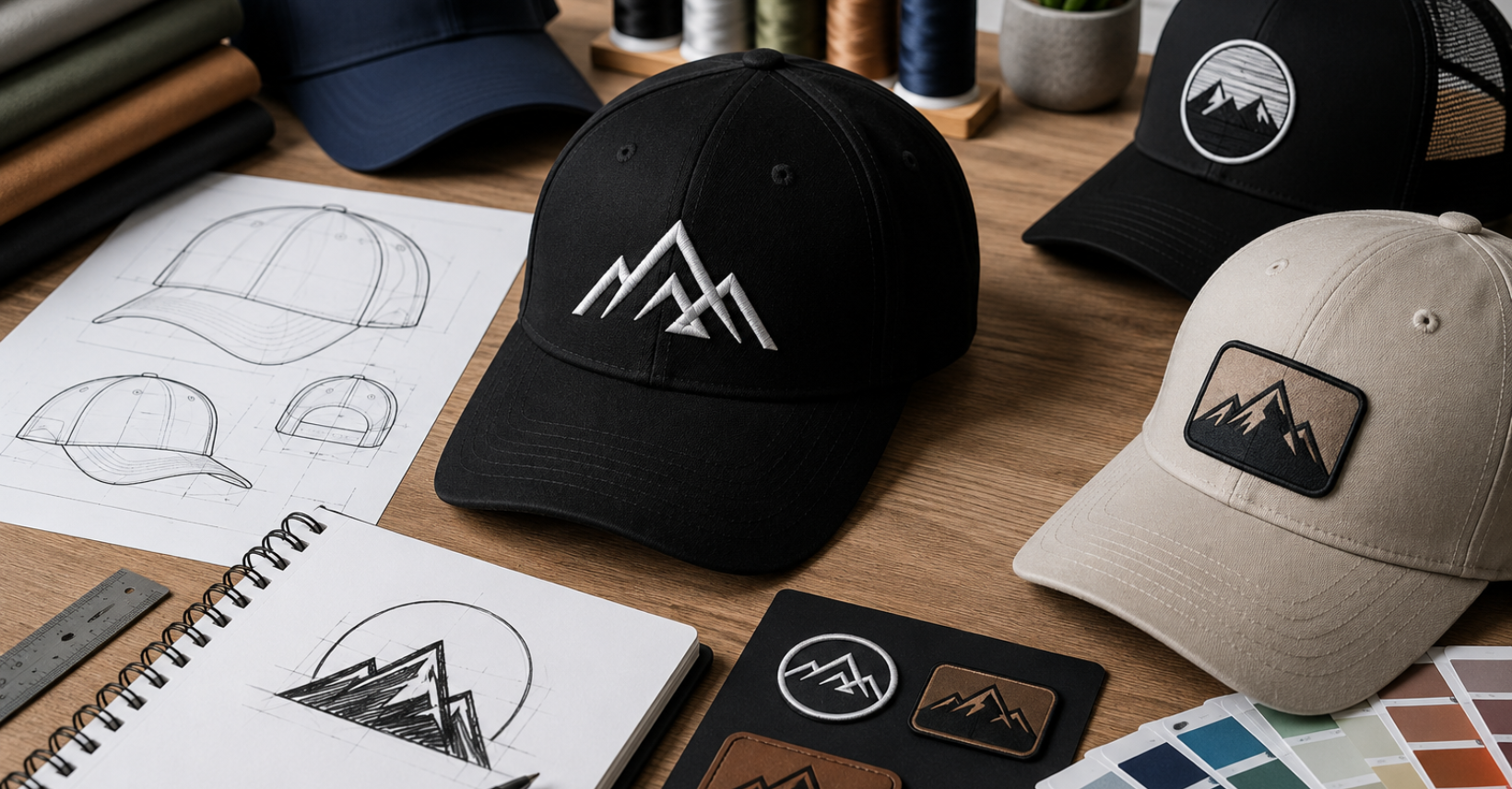
Custom caps are more than just everyday accessories. For businesses, clothing brands, sports teams, organizations, events, and individuals, they provide an opportunity to turn a simple piece of headwear into something memorable, practical, and completely personal.
A well-designed custom cap can communicate a brand identity, bring a team together, promote a business, or become a standout product in a fashion collection. But creating an excellent cap is not simply a matter of putting a logo on the front. The best custom caps are carefully planned from the beginning, with attention given to the cap style, colours, artwork, decoration method, placement, materials, and the people who will eventually wear them.
At Custom Cap UK, the design process is built around helping customers transform their ideas into professional headwear. Whether you are creating branded caps for your company, launching a clothing line, preparing merchandise for an event, or designing caps for a sports club, understanding the fundamentals of custom cap design can help you achieve a much better final result.
In this guide, we will explain how to design custom caps from start to finish, explore different cap styles and decoration methods, discuss common design mistakes, and share practical tips for creating headwear that looks professional and represents your idea effectively.
Why Design Custom Caps?
Before starting your design, it is important to understand what you want your caps to achieve.
Custom caps are versatile products that can serve several different purposes. A company might use them as part of a staff uniform or promotional campaign. A fashion brand may create limited-edition caps as part of a seasonal collection. A sports team can use customized headwear to strengthen team identity, while an event organizer may offer caps as memorable merchandise.
The purpose behind your cap will influence almost every design decision.
For example, a corporate cap may benefit from a clean embroidered logo and subtle brand colours. A streetwear cap might require a bold graphic, oversized lettering, or a distinctive patch. A sports cap could feature a team emblem, mascot, or initials in a strong colour combination.
The first step, therefore, is to define your objective.
Ask yourself:
- Who will wear the caps?
- Where will the caps be worn?
- Is the cap for branding, fashion, promotion, or personal use?
- Should the design look bold or understated?
- Will the caps be sold, gifted, or used as uniforms?
- What message should the cap communicate?
Answering these questions gives your design a clear direction before you begin choosing colours, fonts, or decoration methods.
Step 1: Choose the Right Custom Cap Style
One of the most important decisions in custom cap design is selecting the right base style.
A beautiful logo can still look out of place if it is applied to the wrong type of cap. The shape, crown, brim, closure, and overall construction all influence how the finished design will look.
At Custom Cap UK, customers can explore a range of headwear styles, including baseball caps, embroidered caps, fitted caps, trucker caps, snapbacks, dad caps, 5-panel caps, and beanies. Each style offers a different visual identity and can suit a different audience.
Baseball Caps
Baseball caps are one of the most versatile choices for customization.
Their familiar curved brim and classic shape make them suitable for businesses, sports organizations, events, clubs, promotional campaigns, and everyday fashion. They work particularly well with embroidered logos placed on the front panel.
If you want a traditional, universally wearable design, a custom baseball cap is often an excellent starting point.
Snapback Caps
Snapbacks caps are known for their structured construction, flat brim, and adjustable back closure.
They are particularly popular with streetwear, lifestyle, sports, and youth-focused brands. Because the front panel often provides a strong, structured surface, snapbacks can accommodate bold logos, lettering, and statement graphics.
When designing a snapback, consider creating artwork that takes advantage of the larger visual presence of the front panel.
Trucker Caps
Trucker caps combine a structured front with breathable mesh panels at the back.
Their casual and outdoor-inspired appearance makes them suitable for outdoor businesses, adventure brands, events, festivals, and lifestyle collections.
Trucker caps can look particularly effective with simple front embroidery or a custom patch. Since the front panel is usually the primary branding area, your design should remain clear and recognizable from a distance.
Dad Caps
Dad caps offer a relaxed, low-profile appearance and are often associated with casual fashion and lifestyle branding.
Their softer structure creates a different aesthetic from structured caps. Simple logos, handwritten-style lettering, minimalist symbols, and understated embroidery often work particularly well with this style.
If your brand focuses on relaxed, modern, or vintage-inspired fashion, a custom dad cap could be an excellent option.
Fitted Caps
Fitted caps provide a clean and structured appearance without the adjustable closure found on many other cap styles.
They are frequently associated with sports and premium fashion. When designing fitted caps, consider the proportions of your logo carefully because the front panel is usually the main visual focus.
5-Panel Caps
5-panel caps have a contemporary appearance that makes them popular with creative businesses, fashion labels, streetwear brands, and lifestyle companies.
Their panel construction provides a distinctive canvas for branding. Depending on the design, you can use embroidery, patches, or other customization techniques to create a modern product.
Beanies
If you want to extend your headwear collection beyond traditional caps, customized beanies provide another option.
Beanies are especially useful for winter merchandise, outdoor businesses, workwear, and cold-weather branding. Embroidered logos can create a professional appearance while maintaining the comfortable nature of the product.
The key lesson is simple: choose the cap style before finalizing your artwork. Your design should work with the shape and construction of the headwear rather than fighting against it.
Step 2: Define Your Design Concept
Once you have chosen your cap style, the next step is to establish a clear design concept.
Your concept should reflect the purpose of the cap.
For a business, this might be your existing brand identity. For a fashion label, it could be a new seasonal theme. For a sports team, the concept might revolve around a mascot, team name, or distinctive symbol.
Start by collecting visual references that represent your desired direction.
You might look at:
- Your existing logo
- Brand colours
- Typography
- Product packaging
- Previous merchandise
- Sports uniforms
- Fashion trends
- Vintage graphics
- Industry-specific symbols
However, inspiration should not mean copying another brand’s design. Instead, use references to understand what visual elements appeal to you and then develop something original.
A strong custom cap design should be recognizable without relying on unnecessary decoration.
Step 3: Design a Strong Logo or Graphic
The logo is often the most important part of a custom cap.
Because caps have limited surface area compared with products such as T-shirts or jackets, complex artwork can become difficult to reproduce clearly.
When creating your design, focus on:
Simplicity
Simple designs are often easier to recognize.
A clean symbol or wordmark can make a stronger impression than a crowded graphic containing too many elements.
Balance
Your logo should have a balanced visual structure.
If one side of the artwork is significantly heavier than the other, it may look awkward when placed on the cap. Pay attention to spacing, proportions, and alignment.
Readability
If your design includes text, make sure the letters remain easy to read.
Avoid extremely thin fonts, overly complicated scripts, or tightly packed lettering. A design that looks excellent on a large computer screen may become difficult to recognize once reduced to cap size.
Scalability
Your artwork should be created in a format that can be adjusted for different sizes without losing quality.
Vector artwork is particularly useful because it allows the design to be scaled while maintaining sharp edges.
If you already have a logo but are unsure whether it is suitable for customization, professional artwork assistance can help prepare and optimize the design before production. Custom Cap UK highlights artwork support for tasks such as vectorization, colour matching, and layout preparation.
Step 4: Select Your Cap Colours
Colour is one of the easiest ways to influence the personality of a custom cap.
A black cap with white embroidery creates a very different impression from a cream cap with dark green stitching. Likewise, bright colours can create an energetic appearance, while neutral combinations may feel more premium and understated.
When choosing colours, consider your brand identity and target audience.
For business caps, using established brand colours can improve consistency. For fashion products, you may want to explore seasonal colours or limited-edition combinations.
You should also consider contrast.
If your logo is dark and your cap is also dark, the artwork may not stand out enough. Strong contrast can improve visibility and make your design easier to recognize.
Some popular combinations include:
- Black cap with white embroidery
- Navy cap with cream lettering
- White cap with black logo
- Forest green cap with light embroidery
- Beige cap with dark brown branding
- Red cap with contrasting white artwork
However, there is no universal colour combination that works for every project. The best choice depends on your brand, audience, and intended aesthetic.
Step 5: Choose the Best Customization Method
After creating your artwork and selecting your cap colour, you need to decide how your design will be applied.
Different decoration methods create different visual effects.
Flat Embroidery
Flat embroidery is one of the most popular customization methods for caps.
It creates a clean, professional finish using stitched thread. This technique works particularly well for logos, names, symbols, and straightforward text.
It is a strong choice for corporate caps, uniforms, sports merchandise, and fashion products.
3D Puff Embroidery
If you want your logo to have additional depth, 3D puff embroidery may be worth considering.
This technique creates a raised appearance that gives the design more visual impact. It can work particularly well for bold lettering and simple logos.
However, highly detailed artwork may not always be suitable for this technique. Your design should be evaluated based on its size, shape, and level of detail.
Woven Patches
Woven patches are useful when your artwork contains details that may be difficult to reproduce through traditional embroidery.
They can provide a smooth, clean appearance and are suitable for logos, text, symbols, and detailed artwork.
Leather Patches
Leather patches can add a premium, rugged, or heritage-inspired feel to custom caps.
They are particularly suitable for outdoor brands, lifestyle businesses, craft companies, and fashion collections.
PVC Patches
PVC patches create a modern, durable appearance.
Their dimensional look can work well for outdoor brands, sports merchandise, streetwear, and designs that require a distinctive visual finish.
Printed Designs
Printed customization can be useful when your artwork includes detailed graphics, gradients, or visual elements that are difficult to recreate with stitching.
The ideal method depends on your artwork, budget, quantity, cap material, and desired appearance.
At Custom Cap UK, customization options include embroidery, 3D puff embroidery, woven patches, leather patches, PVC patches, engraving, and print-on-patch options.
Step 6: Decide Where to Place Your Design
The front of the cap is the most obvious location for branding, but it is not your only option.
Depending on the cap style and design, you may consider:
- Front panel
- Side panel
- Back panel
- Above the closure
- Under the brim
- Multiple locations
A large front logo is ideal when you want maximum visibility.
A smaller side logo can create a more subtle and premium appearance.
You can also combine placements. For example, a brand might use its main logo on the front and a small symbol or website detail on the side or back.
However, avoid adding too much information.
A cap does not need to display your entire marketing message. The best designs often prioritize one main visual element and use secondary branding sparingly.
Step 7: Consider the Size of Your Artwork
Size is one of the most important factors in custom cap design.
If the artwork is too small, details may disappear. If it is too large, the design may appear crowded or interfere with the natural shape of the cap.
Your artwork should be proportionate to the cap’s front panel.
Large, bold designs can work well on structured snapbacks, while smaller minimalist logos may be more appropriate for dad caps.
Before production, request a digital mockup showing how the design will look on the actual cap style.
A mockup allows you to evaluate:
- Logo size
- Position
- Colour combination
- Overall balance
- Visual impact
- Relationship between the artwork and cap shape
A professional proof can help identify problems before production begins. Custom Cap UK’s stated process includes sharing artwork or a concept, receiving a digital mockup for approval, moving into production, and completing quality inspection before delivery.
Step 8: Think About Your Target Audience
A successful cap design should be created for the person who will wear it.
Ask yourself what your target audience actually likes.
A corporate audience may prefer sophisticated colours and understated branding. A younger streetwear audience may respond better to bold graphics and modern typography.
Outdoor enthusiasts may appreciate rugged materials and earthy colours. Sports fans may prefer strong team colours and recognizable symbols.
The design should feel natural within the lifestyle of the person wearing it.
This is especially important if you plan to sell your caps.
People are unlikely to purchase merchandise simply because they like your company. They buy products because they want to wear them.
Therefore, think like a customer.
Would someone choose to wear this cap on an ordinary day?
If the answer is yes, your design has a much better chance of becoming successful merchandise.
Step 9: Match the Design to Your Brand Identity
Consistency is essential when creating branded headwear.
If your business already has a recognizable visual identity, your caps should complement it.
Consider matching:
- Logo design
- Brand colours
- Typography
- Tone
- Visual style
For example, a luxury fashion label might use minimal embroidery and neutral colours, while an energetic sports brand could use bold typography and vibrant contrasts.
Your cap should feel like part of your brand rather than a completely separate product.
This consistency can also help customers recognize your brand when they see someone wearing your merchandise.
Step 10: Prepare Your Artwork for Production
Once your design is complete, it needs to be prepared for manufacturing.
A high-quality digital image is a good starting point, but production requirements may vary depending on the customization method.
Your artwork may need to be adjusted for:
- Stitch density
- Thread colours
- Small details
- Line thickness
- Artwork dimensions
- Placement
- Cap construction
Some designs may need to be simplified before embroidery.
For example, a detailed illustration with tiny text might look perfect on a computer but become unclear when embroidered onto a small front panel.
This is why professional artwork preparation can make a major difference.
At Custom Cap UK, the design support process is intended to help customers prepare and optimize artwork before production, making it easier to move from an initial idea to a production-ready design.
Step 11: Request a Digital Mockup
Never rush into production without reviewing how your finished cap is expected to look.
A digital mockup provides a visual representation of your design on the chosen cap.
Review it carefully.
Look at the logo from different angles and consider whether the size feels appropriate. Check whether the colours provide enough contrast and whether the artwork is positioned correctly.
Ask yourself:
- Is the logo too large?
- Is it too small?
- Does it sit in the correct position?
- Is the artwork centred?
- Does the colour combination work?
- Does the design match the cap style?
- Would I personally wear this?
This stage is your opportunity to make adjustments.
Once production begins, changing the design may be difficult or impossible, so taking time during the approval stage is worthwhile.
Step 12: Order a Sample When Necessary
If you are ordering a large quantity of caps, a sample can be extremely valuable.
A sample lets you evaluate the actual product rather than relying only on a digital representation.
You can inspect:
- Fabric quality
- Cap structure
- Fit
- Embroidery quality
- Thread colours
- Patch placement
- Logo size
- Overall appearance
This is particularly useful for fashion brands and businesses developing a new merchandise collection.
If you are satisfied with the sample, you can move forward with greater confidence in the larger production run.
Common Custom Cap Design Mistakes to Avoid
Even a good idea can produce disappointing results if certain design mistakes are overlooked.
Using Too Much Detail
Small cap designs have limited space.
Trying to include too many details can make the artwork difficult to reproduce and recognize.
Keep the design focused.
Choosing the Wrong Font
Decorative fonts can look attractive, but they may become difficult to read when embroidered.
Choose fonts that remain clear at the final production size.
Ignoring Colour Contrast
A logo that blends into the cap will not deliver strong visual impact.
Always check how your thread or patch colours interact with the cap’s base colour.
Overloading the Cap With Branding
More branding does not always mean better branding.
A large front logo combined with multiple side and back logos can make the cap feel crowded.
In many cases, one strong logo is more effective than several competing elements.
Designing Without Considering the Cap Style
A design created for a structured snapback may not look the same on a soft dad cap.
Always consider the construction and shape of the cap during the design process.
Skipping the Mockup Stage
A digital mockup can reveal issues before production.
Do not skip this stage simply to save time.
Copying Trends Too Closely
Trends can provide inspiration, but your design should still have its own identity.
A distinctive cap is more likely to create lasting value than one that simply imitates what is popular today.
How to Design Custom Caps for a Clothing Brand
If you are launching a clothing brand, custom caps can become an important part of your product collection.
Start by defining the identity of your brand.
Is your label:
- Minimalist?
- Luxury?
- Streetwear?
- Vintage?
- Sports-inspired?
- Outdoor-focused?
- Casual?
Your cap design should fit naturally into that identity.
Consider creating multiple colourways using the same core logo. This allows customers to choose their preferred style while keeping the collection visually consistent.
You can also experiment with different cap styles.
For example, a streetwear collection might include snapbacks and 5-panel caps, while a relaxed lifestyle collection could focus on dad caps and baseball caps.
The goal is to create products that customers genuinely want to wear rather than treating the cap as an afterthought.
How to Design Custom Caps for Businesses
Businesses often use caps for employee uniforms, promotional campaigns, events, and branded merchandise.
For corporate use, simplicity is usually effective.
Your company logo should be clearly visible without overwhelming the cap.
Choose colours that align with your existing brand identity and select a cap style that suits your industry.
For example, a construction company might choose durable trucker or baseball caps, while a creative agency could select contemporary 5-panel caps.
The design should reflect the personality of the company while remaining comfortable enough for employees or customers to wear.
How to Design Custom Caps for Sports Teams
Sports caps are an excellent way to strengthen team identity.
Consider incorporating:
- Team initials
- Mascots
- Team colours
- Player numbers
- Established dates
- Sponsor logos
However, prioritize the primary team identity.
The team name or logo should be the main visual element, while sponsor or secondary information should remain less prominent.
A strong sports cap should be instantly recognizable from a distance.
How to Design Custom Caps for Events
Custom caps can also work as event merchandise.
Whether you are organizing a festival, charity event, competition, or corporate gathering, a well-designed cap can serve as both a souvenir and a promotional product.
Include the event name or logo, but avoid adding too much information.
If the event has a unique theme, use that theme to influence the design.
You can also create limited-edition caps that become collectible products for attendees.
The Importance of Quality Materials
Design is important, but the cap itself also needs to feel good.
Customers are more likely to wear a cap repeatedly if it is comfortable, durable, and well constructed.
When choosing a custom cap, consider:
- Fabric
- Crown structure
- Brim shape
- Closure type
- Breathability
- Fit
- Overall construction
The material should suit the intended use.
A lightweight breathable trucker cap may be appropriate for outdoor activities, while a structured cap may be better suited to premium branding or fashion merchandise.
Custom Cap UK highlights premium-grade cotton, polyester blends, and structured buckram among its material options, with different cap styles available for various branding and merchandise needs.
A Simple Custom Cap Design Checklist
Before approving your design, review this checklist:
Purpose
- Do I know why I am creating these caps?
Audience
- Will my target customers or team members want to wear them?
Style
- Does the cap style match my brand?
Logo
- Is the artwork clear and recognizable?
Colours
- Is there enough contrast?
Customization
- Is embroidery, a patch, or another method best for my design?
Placement
- Is the logo positioned correctly?
Size
- Is the artwork proportionate to the cap?
Quality
- Are the materials suitable for the intended use?
Mockup
- Have I reviewed a digital proof?
Sample
- Do I need to approve a physical sample before ordering in bulk?
If you can answer these questions confidently, your design is likely ready for the next stage.
Why Professional Custom Cap Design Support Matters
Designing a custom cap can appear simple, but the details involved in transforming artwork into a finished product can be surprisingly complex.
The design must account for the cap’s construction, available decoration area, artwork size, thread or patch limitations, colour matching, and overall visual balance.
Working with an experienced custom cap manufacturer can make the process easier.
Instead of trying to solve every production challenge yourself, you can provide your logo, artwork, sketch, or concept and receive guidance about the best way to turn it into finished headwear.
At Custom Cap UK, the stated process includes artwork submission, digital mockup approval, production, quality inspection, and delivery. The company also offers a range of cap styles and customization methods designed for businesses, brands, teams, events, and organizations.
Final Thoughts: Create a Cap People Want to Wear
The best custom caps combine design, functionality, and identity.
A successful design is not simply a logo placed on a piece of headwear. It is a carefully considered product that reflects a brand, communicates a message, and feels natural to the person wearing it.
Start by choosing the right cap style. Define your concept, create clean artwork, select suitable colours, and choose a customization method that complements your design. Pay attention to logo placement and size, request a digital mockup, and consider ordering a sample when producing larger quantities.
Whether you are creating custom caps for a business, launching a fashion collection, organizing an event, or building team merchandise, the design process should always begin with the same question:
What will make people want to wear this cap?
When you design with your audience in mind, focus on quality, and work with experienced professionals, your custom caps can become much more than promotional products. They can become wearable representations of your brand, team, community, or personal style.
If you are ready to turn your idea into custom headwear, Custom Cap UK can help you explore different cap styles and customization options, from embroidered caps and baseball caps to snapbacks, trucker caps, dad caps, fitted caps, and more. Share your logo or concept, review your design mockup, and take the next step toward creating custom caps that are made to be seen, remembered, and worn.