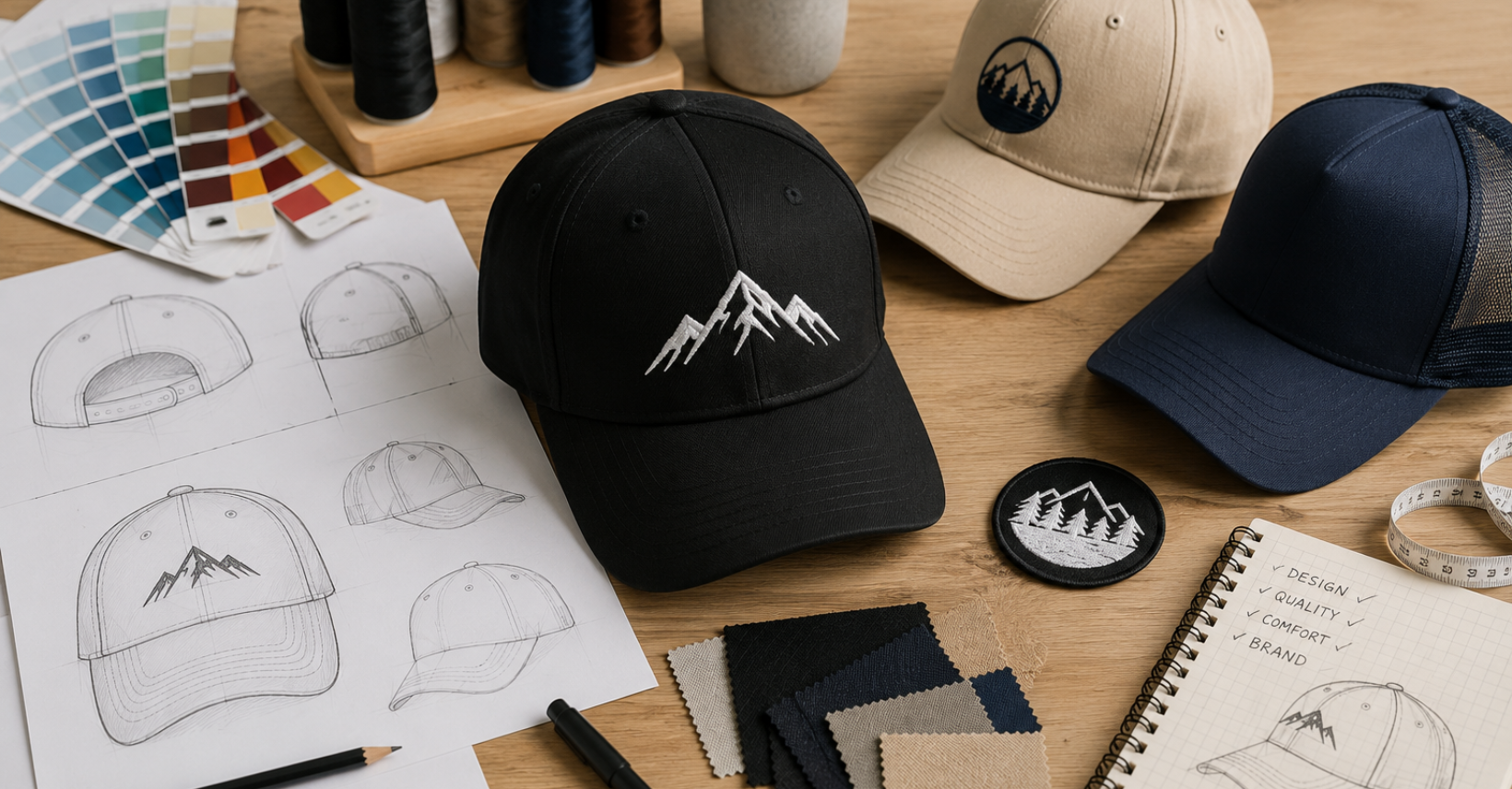
A great custom hat can do far more than complete an outfit. When designed correctly, it becomes a recognisable part of your brand identity—something customers, employees, supporters, and communities can wear proudly wherever they go.
From a small independent business launching its first merchandise collection to an established company looking for a memorable promotional product, custom caps offer an effective way to put your brand in front of people without making your marketing feel like traditional advertising. A well-designed cap can travel to festivals, gyms, sporting events, workplaces, holidays, and social gatherings, creating brand exposure wherever the wearer goes.
But designing a successful branded cap involves more than placing a logo on the front and choosing a colour. The hat style, fabric, fit, decoration method, colour combination, logo size, and even small finishing details can all influence how the final product looks and feels.
At Custom Cap uk, we understand that every brand has its own personality. A streetwear label may want an oversized embroidered design on a contemporary snapback, while a corporate business might prefer a clean logo on a classic baseball cap. An outdoor company could benefit from a breathable trucker style, while a fashion brand may want a premium custom cap with carefully considered detailing.
The key is to create headwear that people genuinely want to wear.
In this guide, we’ll explore how to design the perfect custom hat for your brand, from understanding your identity and choosing the right cap style to selecting materials, customisation techniques, colours, and finishing touches.
Why Custom Hats Are Powerful Branding Tools
Before getting into the design process, it is worth understanding why custom caps have become such a popular branding choice.
Traditional advertising is often temporary. A social media advert disappears from a feed. A billboard is eventually replaced. A flyer is thrown away.
A quality custom hat is different.
When someone chooses to wear your branded cap, your logo becomes part of their everyday appearance. The cap can be seen by colleagues, friends, customers, and strangers throughout the day. If the design is stylish enough, people may continue wearing it long after the original marketing campaign has ended.
Custom caps can support your brand in several ways:
- Increase everyday brand visibility
- Create a sense of community
- Strengthen employee identity
- Support promotional campaigns
- Build merchandise collections
- Create memorable event giveaways
- Help fashion brands develop recognisable products
- Encourage customer loyalty
- Promote clubs, teams, and organisations
However, there is one important principle to remember: people wear products they like.
If your cap feels uncomfortable, looks outdated, or appears overly promotional, it may remain at the back of someone’s wardrobe. If it has a great fit, quality construction, and an attractive design, it has a much better chance of becoming a regular part of their wardrobe.
That is why the design process matters.
Step 1: Start With Your Brand Identity
The first step in designing a successful custom hat is understanding your brand.
Before choosing the cap style or embroidery colours, ask yourself what your brand represents.
Is your brand:
- Modern or traditional?
- Minimalist or expressive?
- Premium or affordable?
- Professional or playful?
- Sporty or fashion-focused?
- Rugged or refined?
- Youthful or mature?
Your answers should influence every decision you make about your custom headwear.
For example, a premium clothing brand might benefit from a simple embroidered logo, subtle colours, and a high-quality structured cap. A youth-focused streetwear brand may prefer a bold graphic, oversized lettering, or a statement patch.
The most important thing is consistency.
Your custom hat should feel like it belongs to the same brand as your website, clothing, packaging, social media, and other marketing materials. When customers see the cap, they should immediately recognise the connection.
Think About Your Target Audience
Your audience is just as important as your brand identity.
Think about the people who will actually wear the hat.
Consider:
- Age
- Lifestyle
- Fashion preferences
- Location
- Climate
- Occupation
- Hobbies
- Cultural influences
- Existing clothing choices
A design that appeals to university students may not work for a corporate audience. Similarly, a cap designed for outdoor workers may need different materials and construction than one created as a fashion accessory.
Try to design for your audience rather than only for yourself.
Your personal preferences are useful, but the ultimate question should be whether your target customer would genuinely choose to wear the cap.
Step 2: Choose the Right Custom Cap Style
There is no universal “best” cap style. The right choice depends on your brand, audience, purpose, and design.
Different styles create completely different impressions.
Baseball Caps
Baseball caps are among the most versatile options for custom branding.
They are suitable for:
- Businesses
- Sports teams
- Events
- Promotional campaigns
- Fashion brands
- Clubs
- Everyday merchandise
Their familiar shape makes them easy to wear and provides a practical surface for embroidered logos.
If you are unsure where to start, a classic baseball cap can be an excellent option.
Snapback Caps
Snapbacks are particularly popular within streetwear and contemporary fashion.
The adjustable snap closure makes them practical, while their structured front panel provides a strong area for branding.
They can work particularly well for:
- Streetwear labels
- Music brands
- Creative businesses
- Sports-inspired collections
- Youth-focused brands
Bold embroidery and larger graphic designs can work especially well with this style.
Trucker Caps
Trucker caps are known for their breathable mesh panels and casual appearance.
They are ideal for:
- Outdoor brands
- Adventure businesses
- Festivals
- Summer campaigns
- Workwear
- Lifestyle brands
The mesh construction makes them a practical choice for warmer conditions, while the front panel gives you space for custom branding.
Fitted Caps
Fitted caps are designed to provide a more specific and secure fit.
They can create a premium, athletic, or professional appearance and are particularly popular with sports and lifestyle brands.
The main consideration is sizing. Unlike adjustable caps, customers need to select the correct size.
Bucket Hats
Although not technically a traditional cap, bucket hats have become an important part of contemporary custom headwear.
They can be ideal for:
- Fashion labels
- Festivals
- Music events
- Creative brands
- Summer collections
A bucket hat can also provide a larger canvas for repeating patterns or creative artwork.
Beanies
For colder seasons, custom beanies provide another opportunity to extend your brand into winter accessories.
They are particularly effective for:
- Outdoor businesses
- Winter merchandise
- Workwear
- Fashion brands
- Sports clubs
The choice of headwear should always reflect the context in which your audience will use it.
Step 3: Select the Right Material
The fabric of your cap affects its appearance, comfort, durability, and suitability for different environments.
A beautiful design cannot compensate for a hat that feels uncomfortable or poorly constructed.
Cotton
Cotton is one of the most popular materials for everyday caps.
It is generally:
- Comfortable
- Breathable
- Versatile
- Easy to wear
- Suitable for casual use
Cotton caps work particularly well for brands that want a natural, classic appearance.
Cotton Twill
Cotton twill is a popular choice for structured and traditional baseball caps.
Its woven construction provides a durable finish and creates a reliable surface for embroidery.
For businesses looking for classic branded headwear, cotton twill can be an excellent starting point.
Polyester
Polyester is valued for its durability and performance characteristics.
It can be particularly useful for:
- Sportswear
- Outdoor activities
- Performance-focused brands
- Active lifestyles
If your customers are likely to wear your caps during physical activity, consider materials that are appropriate for the intended environment.
Mesh
Mesh is commonly associated with trucker caps and provides additional ventilation.
It is especially suitable for warmer weather and outdoor use.
When choosing materials, always consider how the cap will actually be worn—not just how it looks in a product photograph.
Step 4: Create a Strong Logo for Your Cap
Your logo is often the most important visual element of a branded cap.
However, a logo designed for a website or business card may not automatically work perfectly on a hat.
Caps have limited space, and the curved surface can affect how artwork appears.
Before production, consider whether your logo needs to be simplified.
A strong cap logo should generally be:
- Clear
- Recognisable
- Easy to read
- Visually balanced
- Appropriate for the available space
Fine details that look excellent on a large screen may disappear when embroidered at a smaller size.
If your existing logo contains lots of text or intricate details, you may want to create a simplified version specifically for your headwear.
This does not mean changing your brand identity. Instead, it means adapting the logo so that it works effectively in a different format.
Step 5: Think Carefully About Logo Placement
Where your branding appears can change the entire appearance of your custom hat.
Front
The front is the most common location for a logo.
It provides maximum visibility and is ideal for your primary brand identity.
For many companies, a clean embroidered logo centred on the front creates a professional and timeless result.
Side
The side of the cap can be used for:
- Secondary logos
- Initials
- Symbols
- Small graphics
- Collection details
Side embroidery is particularly useful when you want to create a more subtle design.
Back
The rear of a cap can provide additional space for branding.
You might use it for:
- A website address
- A short slogan
- A year
- A small logo
- A brand message
The key is not to overcrowd the design.
Undervisor
For a more unexpected approach, consider customising the underside of the brim.
This can create a hidden detail that customers discover when they wear or adjust the hat.
It can be particularly effective for limited-edition designs and fashion-focused collections.
Step 6: Choose Your Colours Strategically
Colour plays an important role in how your custom hat communicates your brand.
Your first instinct may be to use your exact corporate colours, and in many cases, that is the right choice. However, you should also consider how those colours will work on the actual cap.
For example, a light logo on a light-coloured hat may have very little contrast.
Similarly, using too many colours can make a small design look cluttered.
Think about:
Black
Often associated with sophistication, confidence, and modern style.
White
Clean, simple, and versatile.
Blue
Commonly associated with trust, reliability, and professionalism.
Red
Energetic, bold, and attention-grabbing.
Green
Can communicate nature, sustainability, and outdoor themes.
Neutral tones
Colours such as beige, grey, and navy can create a premium and understated appearance.
The best colour combination is ultimately one that provides strong contrast while remaining consistent with your brand.
Step 7: Choose the Best Customisation Method
One of the biggest decisions in custom headwear is selecting the right decoration technique.
The method you choose should depend on the artwork, desired appearance, quantity, budget, and durability requirements.
Embroidery
Custom cap embroidery remains one of the most popular options for branded headwear.
It creates a textured, professional appearance and can give a cap a premium feel.
Embroidery works particularly well for:
- Logos
- Initials
- Short text
- Simple graphics
- Brand symbols
The raised texture can make your branding feel more substantial than a flat printed design.
However, extremely fine details may not translate perfectly into embroidery, so your artwork may need to be adapted.
Printed Designs
Printing can be useful when your artwork contains:
- Complex graphics
- Photographic details
- Gradients
- Fine colour transitions
It can provide a smooth appearance and may be suitable for designs that are difficult to reproduce with thread.
Patches
Custom patches can add another dimension to your cap design.
Depending on the desired aesthetic, you can explore embroidered, woven, or other patch styles.
Patches can be particularly effective for:
- Streetwear
- Outdoor brands
- Clubs
- Limited-edition collections
- Vintage-inspired designs
The right technique is the one that supports your design rather than forcing your design to fit a particular technique.
Step 8: Prioritise Fit and Comfort
A cap can look amazing but still fail if it is uncomfortable.
The fit should always be considered during the design process.
Common closure options include:
Snapback
Adjustable and convenient, making it suitable for a wide range of wearers.
Strapback
Offers adjustability while often creating a more casual appearance.
Fitted
Designed for a specific head size and often associated with a more structured or athletic look.
For promotional caps intended for a broad audience, adjustable options can be particularly practical.
For fashion collections, however, a fitted or specific closure may contribute to the desired aesthetic.
Always consider who will wear the hat and how it will be used.
Step 9: Add Small Details That Make Your Cap Unique
Sometimes, the smallest details have the biggest impact.
Once you have created your primary design, think about how you can make the cap feel more distinctive.
You could consider:
- Custom interior labels
- Special packaging
- Side embroidery
- Rear embroidery
- Branded closures
- Custom patches
- Hidden messages
- Limited-edition details
- Special colour combinations
For example, your main logo could appear on the front while a small symbol representing your brand’s story appears on the side.
These details can turn a standard branded cap into a product that feels intentionally designed.
This is especially valuable for fashion and lifestyle brands where customers are purchasing the hat as merchandise rather than simply receiving it as a promotional item.
Step 10: Consider the Design From Every Angle
One common mistake is judging a custom cap only from the front.
Before approving your final design, look at it from multiple perspectives.
Ask yourself:
- How does it look from the front?
- Is the logo balanced?
- Is the side too empty?
- Does the back need additional branding?
- Does the design work with the shape of the brim?
- Does the logo remain readable at a distance?
- Does the colour combination provide enough contrast?
A good custom hat should look intentional from every angle.
If you are creating merchandise, think about how it will appear in photographs and social media content as well.
Step 11: Create a Sample Before Ordering in Bulk
If you are ordering a large quantity of custom caps, approving a sample before full production can be one of the smartest decisions you make.
Digital mockups are useful, but they cannot always show exactly how a physical product will look.
A sample allows you to evaluate:
- Fabric quality
- Cap structure
- Fit
- Colour accuracy
- Embroidery quality
- Logo placement
- Stitching
- Overall appearance
You may notice something in person that was not obvious on a computer screen.
Perhaps the logo needs to be slightly smaller. Maybe the cap colour looks different under natural light. Or you may decide that another style suits your branding better.
Making changes before mass production can help prevent expensive mistakes.
It is also useful to have other people review the sample.
Ask team members, existing customers, or members of your target audience for honest feedback.
Step 12: Work With the Right Custom Cap Manufacturer
Even the best design can be let down by poor production.
Choosing the right manufacturing partner is therefore an important part of creating successful custom headwear.
Before placing your order, consider:
Experience
Does the manufacturer have experience producing custom caps?
Quality
What materials and production standards do they use?
Customisation
Can they provide the embroidery, printing, patches, or other techniques you need?
Minimum Order Quantities
Make sure the minimum order fits your requirements.
Samples
Ask whether you can review a sample before committing to a large order.
Communication
A reliable manufacturer should be able to answer your questions and explain the production process clearly.
Pricing
Do not automatically choose the cheapest quote. Extremely low prices can sometimes indicate compromises in material or production quality.
Reviews
Look for evidence of customer satisfaction and consistent quality.
At Custom Cap uk, the goal should always be to create custom headwear that combines your brand identity with quality, practicality, and visual appeal.
Step 13: Design for the Way People Will Wear It
One of the best questions you can ask during the design process is:
“Would someone wear this if they didn’t have to?”
This question is particularly important for promotional merchandise.
A cap covered with large logos may technically advertise your company, but that does not necessarily mean people will want to wear it.
Instead, think about how to make your brand part of an attractive product.
You might use:
- A small embroidered logo
- A subtle brand symbol
- A stylish colour combination
- A premium cap shape
- A minimal design
- A creative patch
The more wearable the cap, the more valuable it can become as a branding tool.
Step 14: Use Your Custom Caps as Part of a Bigger Marketing Strategy
Once your caps are produced, your marketing work begins.
Do not simply hand them out and forget about them.
Create a strategy around your custom headwear.
You could use your caps for:
- Product launches
- Social media campaigns
- Customer giveaways
- Influencer collaborations
- Employee uniforms
- Trade shows
- Sporting events
- Charity events
- Limited-edition drops
Encourage customers to share photographs wearing your caps.
User-generated content can help your brand appear more authentic because potential customers see real people using your products.
If you are selling custom caps as merchandise, create lifestyle photography rather than relying exclusively on product shots.
Show people wearing the hat in realistic environments.
This helps customers imagine how the product could fit into their own lives.
Common Custom Hat Design Mistakes to Avoid
Designing a branded cap may appear simple, but several mistakes can affect the final result.
1. Choosing Style Before Purpose
Do not select a cap simply because it is popular.
Think about how it will be used.
A lightweight trucker cap may be perfect for an outdoor brand, while a structured snapback may better suit a streetwear label.
2. Making the Logo Too Large
Bigger is not always better.
An oversized logo can make the hat feel overly promotional and may reduce its appeal as a fashion item.
Consider the balance between brand visibility and wearability.
3. Using Too Many Colours
Multiple colours can make a design difficult to reproduce, particularly when embroidery is involved.
A focused colour palette often creates a cleaner result.
4. Ignoring Contrast
A beautiful logo can disappear if it does not contrast sufficiently with the cap.
Always check how the colours work together before production.
5. Using Artwork With Too Much Detail
Tiny text and intricate details may not translate well onto a small embroidered area.
Simplifying your artwork can often create a stronger final result.
6. Forgetting About Comfort
Your customers will not wear a hat they find uncomfortable.
Fit, material, ventilation, and adjustability all matter.
7. Skipping the Sample
Ordering a large quantity without reviewing a physical sample can be risky.
Always consider testing your design first.
8. Choosing a Manufacturer Based Only on Price
The cheapest option is not always the best value.
A poorly made cap can damage the perception of your brand.
How to Make Your Custom Hat Look More Premium
If you want your branded headwear to have a high-end appearance, focus on restraint and consistency.
A premium design does not necessarily need to be complicated.
In many cases, the opposite is true.
Consider using:
- A simple logo
- High-quality embroidery
- A carefully selected cap colour
- Strong contrast
- Minimal additional branding
- Consistent brand elements
- Quality materials
- Thoughtful finishing details
For example, a dark cap with a small tonal embroidered logo can look far more sophisticated than a design with multiple oversized graphics.
Think about the brands your target audience already likes. What makes their products appealing?
Often, it is not the number of design elements but the quality and confidence behind each choice.
Custom Hats for Different Types of Brands
Different businesses may approach custom headwear in different ways.
Fashion Brands
Fashion brands can experiment with bold graphics, premium embroidery, limited editions, patches, and unusual colour combinations.
The cap should feel like a genuine fashion product rather than simple promotional merchandise.
Corporate Businesses
Corporate brands may benefit from understated designs.
A clean embroidered logo on a classic cap can work well for:
- Staff uniforms
- Corporate events
- Conferences
- Client gifts
Sports Brands
Sports-focused businesses can explore athletic styles, bold colours, embroidered logos, and team-inspired graphics.
Durability and comfort should be particularly important.
Outdoor Brands
Outdoor businesses may prefer trucker caps or performance-oriented styles.
Breathability, practicality, and weather suitability should influence the design.
Restaurants and Hospitality Businesses
Restaurants, cafés, and hospitality brands can use custom caps as part of employee uniforms or merchandise.
A simple embroidered logo can create a consistent visual identity while remaining wearable outside the workplace.
Frequently Asked Questions About Designing Custom Hats
What is the best cap style for branding?
There is no single best style for every brand. Classic baseball caps are highly versatile, while snapbacks, trucker caps, fitted caps, and other styles may be better suited to specific audiences and industries.
Is embroidery better than printing for custom caps?
It depends on your design. Embroidery is popular for logos and simple graphics because it creates a textured, durable appearance. Printing may be more suitable for complex artwork, gradients, or highly detailed graphics.
How many colours should I use on a custom cap?
There is no fixed limit, but a focused colour palette often produces the cleanest and most professional result. Two or three well-chosen colours can be enough to create a strong visual identity.
Should I use my full logo on a cap?
Not always. If your logo contains small text or complicated details, consider creating a simplified version for your cap. Your goal should be to maintain brand recognition while ensuring the design remains clear.
What is the best material for everyday caps?
Cotton and cotton-blend fabrics are popular choices for everyday wear because they can provide a comfortable and versatile option. The ideal material ultimately depends on the intended use and style of the cap.
Should I order a sample before bulk production?
Yes. A physical sample can help you assess the actual fit, material, colours, embroidery, and logo placement before committing to a larger production run.
How can I make my branded cap more wearable?
Focus on creating a product that looks good even without the branding. Use attractive colours, comfortable materials, a suitable fit, and a balanced logo placement. The more wearable the cap, the more likely customers are to use it regularly.
Can I put branding on the side or back of a cap?
Yes. Side and rear placements can be used for secondary logos, slogans, initials, symbols, or other design details. They can also complement a primary front logo without overcrowding the main design.
Final Thoughts: Designing a Custom Hat That People Actually Want to Wear
Designing the perfect custom hat for your brand is a process that combines creativity, strategy, and practical decision-making.
The strongest custom caps do not happen by accident. They begin with a clear understanding of the brand and its audience. From there, every decision from the cap style and material to the colour, logo placement, and decoration method—should contribute to one cohesive result.
Start by defining your brand identity. Understand who you are designing for and what they actually want to wear. Choose a cap style that fits your brand’s personality and purpose, then select materials that provide the right combination of comfort, durability, and appearance.
Pay close attention to your logo. Make sure it is clear and suitable for the available space, and carefully consider whether embroidery, printing, patches, or another customisation technique will bring your design to life most effectively.
Do not overlook the smaller details. A thoughtful side design, custom label, hidden message, or unique colour combination can transform an ordinary cap into a memorable piece of branded merchandise.
Most importantly, test your design before committing to a large order. A physical sample gives you the opportunity to identify problems, collect feedback, and make improvements before production.
Finally, choose a reliable custom cap manufacturer that understands your vision and can deliver the level of quality your brand deserves.
At Custom Cap uk, your custom headwear should be more than a cap with a logo attached. It should be a wearable representation of your brand—something that looks great, feels comfortable, and gives people a reason to keep wearing it.
Because when you design a custom hat that people genuinely enjoy wearing, your branding does not feel like advertising.
It becomes part of their style.