
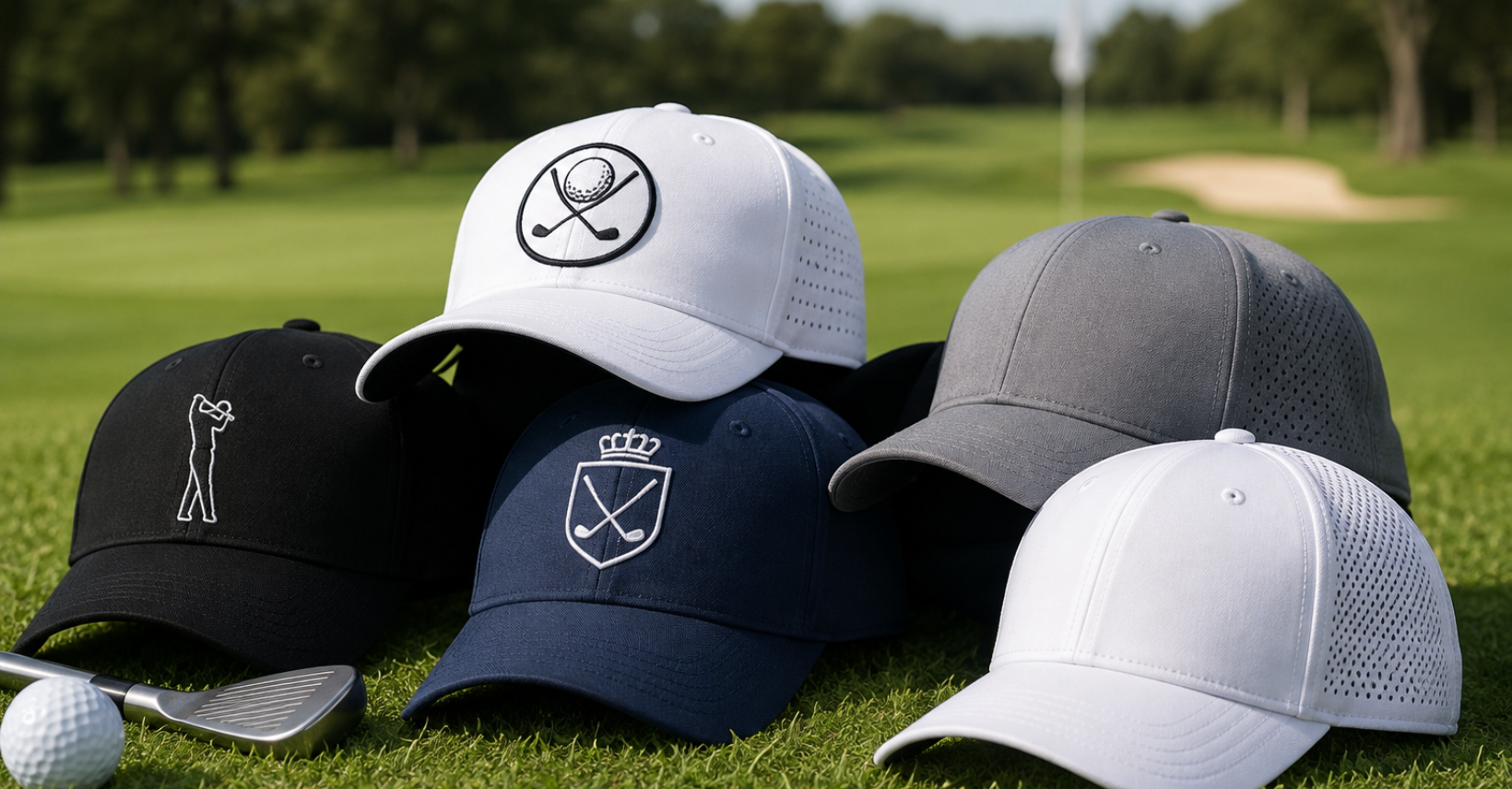
Golf may look like a relaxed sport, but anyone who has spent four or five hours walking around a course knows how demanding it can be. From early-morning tee times to hot summer afternoons, golfers are exposed to changing temperatures, bright sunlight, wind, sweat, and occasional rain. That makes the right golf cap much more than a fashion accessory.
A well-designed golf cap can help shade your eyes, manage sweat, improve comfort, and complete your on-course look. The wrong one, however, can become a distraction. A cap that feels too tight, traps heat, absorbs sweat, or constantly moves during your swing can make an otherwise enjoyable round uncomfortable.
For golfers, golf clubs, corporate teams, and brands looking to create their own headwear, choosing the right cap means looking beyond colour and logo placement. Fabric, fit, ventilation, brim design, adjustability, durability, and customization all matter.
At Custom Cap uk, we understand that a quality cap should combine style with practical performance. Whether you need caps for a golf club, tournament, business promotion, team, event, or personal use, understanding what makes a golf cap comfortable and functional is the first step toward making the right choice.
In this guide, we’ll explain how to choose the best golf caps for comfort and performance, what materials to consider, which features matter most, and how to select a style that works for your specific needs.
Why the Right Golf Cap Matters
A round of golf can last several hours, and much of that time is spent outdoors. This means your headwear needs to perform throughout the entire game rather than simply look good for the first few holes.
Golf caps can provide several practical benefits:
- Protection from direct sunlight
- Shade for the eyes
- Better sweat management
- Improved ventilation
- Comfortable fit during movement
- Reduced distraction during play
- Protection from light weather conditions
- A polished appearance on the course
A good cap should feel almost invisible once you put it on. You shouldn’t have to keep adjusting it after every swing or stop to wipe away sweat because the material cannot handle moisture.
Modern golf headwear increasingly combines technical fabrics with lightweight construction and breathable designs. Current golf-cap guides also highlight moisture-wicking materials, ventilation, fit, and UV protection among the most important considerations for golfers.
The key is to find the balance between comfort, protection, performance, and personal style.
1. Start With the Fabric
One of the most important decisions when choosing a golf cap is the fabric.
The material directly affects how the cap feels against your head, how quickly it dries, how much heat it retains, and how well it handles regular use.
Polyester
Polyester is a popular choice for performance-oriented golf caps because it can be lightweight, durable, and suitable for moisture-management applications.
For golfers who regularly play in warm conditions, a lightweight polyester cap can help create a more comfortable experience than heavier materials.
Nylon
Nylon can also be useful when durability and lightweight construction are priorities. It is commonly used in outdoor headwear and can work well for golfers who want a cap that is easy to wear for long periods.
Cotton
Cotton offers a naturally soft feel and can be a good option when comfort and casual styling are the priority.
However, cotton can absorb moisture rather than moving it away from the skin, so it may not always be the first choice for golfers playing in particularly hot or humid conditions.
Performance Blends
Blended fabrics can provide a combination of desirable characteristics. Depending on the construction, a blend may balance softness, stretch, durability, breathability, and moisture management.
For performance golf caps, don’t simply choose a fabric because it sounds premium. Consider how the material will behave during an actual round of golf.
2. Look for Moisture-Wicking Performance
Sweat is one of the biggest reasons an otherwise comfortable cap can become irritating during golf.
Walking several miles around a course under the sun can generate considerable heat. If your cap absorbs sweat and stays damp, it may become heavy and uncomfortable.
Moisture-wicking materials are designed to move moisture away from the skin toward the outer surface of the fabric, where it can evaporate more easily.
This is particularly useful for:
- Summer golf
- Competitive rounds
- Long practice sessions
- Golf tournaments
- Warm climates
- Players who sweat heavily
A good sweatband is equally important.
The sweatband sits directly against your forehead, so its construction can have a noticeable impact on comfort. A quality sweatband should help manage moisture without creating excessive pressure around your head.
If you frequently finish a round with a completely soaked cap, consider prioritizing lightweight, moisture-managing construction.
3. Breathability Is Essential
A cap can have excellent styling and still be uncomfortable if it doesn’t allow enough airflow.
Heat builds up naturally around your head, particularly when you’re walking under direct sunlight. Breathable construction allows air to circulate and helps reduce the feeling of overheating.
Look for features such as:
- Mesh panels
- Ventilation openings
- Lightweight fabrics
- Perforated sections
- Breathable sweatbands
- Airflow-focused crown construction
Mesh golf caps can be especially useful during hot-weather rounds.
However, ventilation needs to be balanced with protection and appearance. Too much open mesh may not provide the structure or coverage you want.
The best design depends on your playing environment.
For example, someone playing primarily in a hot summer climate may prioritize maximum airflow, while a golfer playing in cooler conditions may prefer a more structured cap with greater coverage.
4. Consider UV and Sun Protection
Golfers can spend hours exposed to sunlight, making sun protection an important consideration when choosing headwear.
A cap’s brim provides shade for your face and eyes, but the fabric itself can also play a role in UV protection when it has a verified UPF rating.
Some golf-headwear guides recommend looking for UPF-rated materials, with UPF 50+ commonly presented as a high level of fabric-based protection.
When evaluating sun protection, consider:
- Fabric’s UPF rating
- Brim coverage
- Crown coverage
- How the cap fits
- Time spent outdoors
- Typical playing conditions
It’s also important to remember that a cap should complement, rather than replace, other sun-protection measures such as sunscreen and appropriate clothing.
For golfers who regularly play in strong sunshine, sun protection should be considered part of the cap’s performance rather than simply an optional feature.
5. Choose the Right Brim
The brim is one of the most noticeable parts of a golf cap, but it also has an important practical purpose.
A curved brim can provide shade while maintaining a traditional athletic appearance. A flatter brim can create a more contemporary streetwear-inspired look.
Your choice ultimately depends on your preferences and the style of golf you play.
Curved Brim Caps
Curved brims are a classic choice for golf.
They provide a familiar appearance and can help shade the eyes from sunlight without creating an overly bulky profile.
Flat Brim Caps
Flat-brim caps offer a modern appearance and are particularly popular among golfers who want a more fashion-forward look.
They can also work particularly well for custom branding because the front panel creates a strong visual area for logos.
Larger Coverage
Golfers who prioritize maximum shade may prefer headwear offering more coverage than a standard baseball-style cap.
However, larger coverage can change the overall feel and appearance of the hat, so consider your comfort, course dress code, and personal preference before choosing.
6. Get the Fit Right
Even the best-performing material won’t help if the cap doesn’t fit properly.
A golf cap should stay secure without feeling excessively tight.
An overly tight cap can create pressure around the forehead and temples. A loose cap, meanwhile, may shift during your golf swing or become uncomfortable when walking in windy conditions.
Look for adjustable features such as:
- Snapback closures
- Hook-and-loop straps
- Buckle adjustments
- Stretch-fit construction
- Elasticized sections
Adjustability is especially useful when a cap will be shared by multiple people, such as within a golf team or corporate event.
For personal use, accurate sizing can provide an even cleaner and more comfortable fit.
7. Think About the Crown Structure
The crown is the main body of the cap and influences both appearance and comfort.
Golf caps generally fall into different construction categories, including structured and unstructured designs.
Structured Caps
Structured caps maintain a more defined shape.
They can create a polished, professional appearance and provide a strong canvas for embroidery or other branding.
This makes them particularly suitable for:
- Golf clubs
- Corporate teams
- Tournament merchandise
- Business branding
- Professional-looking uniforms
Unstructured Caps
Unstructured caps generally have a softer construction that conforms more naturally to the head.
They can feel relaxed and casual while providing a less rigid appearance.
Neither option is automatically better.
The right choice depends on whether you prioritize a traditional structured appearance or a softer, more relaxed fit.
8. Don’t Ignore Weight
When you’re wearing a cap for five hours, even small differences in weight can become noticeable.
A heavy cap may feel fine when you first put it on but become increasingly uncomfortable as the round progresses.
Lightweight golf caps are often a smart choice for:
- Summer rounds
- Walking golfers
- Golf tournaments
- Travel
- Practice sessions
- Outdoor events
The objective isn’t necessarily to choose the lightest cap available.
Instead, look for a design that provides enough structure and protection while remaining comfortable throughout an entire round.
9. Choose a Colour That Works on the Course
Colour is where performance and personal style meet.
Classic golf-cap colours include:
- Black
- White
- Navy
- Grey
- Green
- Khaki
- Royal blue
Light colours can create a fresh summer appearance, while darker shades can provide a more understated and versatile style.
For golf clubs and businesses, colour becomes even more important because the cap may need to match existing branding.
A custom cap in your organization’s colours can help create a consistent appearance across players, staff, sponsors, and event participants.
10. Consider the Course Dress Code
Before choosing your golf cap, check whether the golf club has any dress-code requirements.
Some courses may have expectations concerning:
- Cap styles
- Logo sizes
- Colours
- Branding
- Orientation of the cap
- General appearance
A cap that works perfectly for a casual golf outing may not be appropriate for a formal club environment.
If you’re ordering custom golf caps for a club or tournament, it’s worth confirming the requirements before production.
11. Golf Caps Should Support Your Game
A cap won’t improve your golf swing by itself, but it can eliminate small distractions.
Imagine standing over a putt while:
- Sweat is running into your eyes
- Your cap is too tight
- The brim is blocking your view
- The hat keeps shifting
- The material feels hot
- You’re constantly adjusting the closure
These small annoyances can affect concentration.
Comfortable headwear allows you to focus on what actually matters: your game.
That is why performance should be considered alongside appearance when selecting golf caps.
12. Think About Weather Conditions
Your ideal golf cap may change depending on the season.
Hot Weather
For hot weather, prioritize:
- Breathable materials
- Lightweight construction
- Moisture management
- Ventilation
- Sweat-wicking sweatbands
- Sun protection
A lightweight performance cap can be particularly useful when temperatures rise.
Cooler Weather
During cooler conditions, you may prefer a more substantial material that provides additional warmth.
Some golfers may choose winter-specific headwear rather than a traditional lightweight golf cap.
Windy Conditions
If you regularly play on exposed courses, secure adjustability becomes especially important.
A cap that fits securely is less likely to become a distraction when the wind picks up.
Light Rain
If rain is common where you play, consider materials designed to handle light moisture.
However, remember that a cap designed for light showers is not necessarily a fully waterproof piece of outdoor equipment.
13. Match the Cap to Your Playing Style
Not every golfer has the same requirements.
Casual Golfer
If you play occasionally, comfort and appearance may be your biggest priorities.
A classic adjustable cap with a comfortable sweatband can be more than enough.
Regular Golfer
Someone playing several times a week may benefit from investing more heavily in breathable, lightweight, moisture-managing construction.
Competitive Golfer
Competitive players may prioritize consistency.
The cap should fit securely, stay comfortable throughout the round, and avoid creating distractions.
Golf Club Member
Club members may want a cap that represents their club identity while still being practical enough for regular play.
Golf Business or Brand
Businesses should think about how the cap represents the brand.
A well-designed custom golf cap can become wearable advertising while giving customers, employees, or clients something useful.
14. Custom Golf Caps: Style Meets Branding
For businesses and golf organizations, custom golf caps offer an opportunity to combine practical headwear with brand visibility.
Instead of simply putting a logo on a generic cap, think about the entire design.
Consider:
- Logo size
- Logo position
- Embroidery style
- Cap colour
- Thread colour
- Side branding
- Back branding
- Closure style
- Overall cap shape
A well-designed cap should make the branding look like part of the product rather than an afterthought.
At Custom Cap UK, custom headwear can be approached as a complete branding piece rather than simply a blank cap with a logo added.
This is particularly valuable for golf-related businesses because caps are naturally suited to the environment.
A golfer might wear a branded cap during:
- Golf tournaments
- Corporate golf days
- Club competitions
- Charity events
- Team outings
- Promotional campaigns
- Golf exhibitions
- Weekend rounds
That gives your brand visibility while providing the wearer with something practical.
15. Embroidery Is a Strong Choice for Golf Caps
If you’re creating custom golf caps, embroidery is one of the most recognizable decoration methods.
A professionally embroidered logo can give a cap a premium, traditional appearance that fits naturally within golf culture.
Embroidery can work particularly well for:
- Club logos
- Company names
- Initials
- Team logos
- Tournament branding
- Sponsor logos
- Monograms
The key is choosing an appropriate design.
Very detailed artwork may need to be simplified when reduced to a small embroidered area. Fine lines, tiny text, and complicated details can lose clarity.
For the best results, think about how the logo will look at actual cap size, rather than only looking at the original artwork on a computer screen.
16. Choose the Right Logo Placement
The front of the cap is the most obvious location for branding, but it isn’t the only option.
Front
The front panel provides maximum visibility and is the traditional location for golf-club and company logos.
Side
Side embroidery can add subtle branding without making the design feel overly promotional.
Back
The rear area can be useful for smaller logos, website addresses, slogans, or secondary branding.
Multiple Locations
For tournament or corporate caps, combining front and side branding can create a more premium appearance.
However, more branding isn’t always better.
A clean, well-balanced design can often look more professional than a cap covered in multiple logos.
17. Don’t Sacrifice Comfort for Branding
One mistake businesses sometimes make is focusing entirely on how much branding they can fit onto a cap.
The wearer is ultimately the person who decides whether the cap gets used again.
If the cap is uncomfortable, too heavy, poorly ventilated, or badly fitted, your logo may spend more time sitting in a cupboard than appearing on the golf course.
The better strategy is:
Create a cap people genuinely want to wear.
When the product is comfortable and attractive, your branding naturally gets more exposure.
18. Quality Matters for Repeat Use
A golf cap isn’t always worn once.
A golfer may use the same cap for dozens of rounds, which means durability matters.
Look for:
- Strong stitching
- Reliable closures
- Durable fabric
- Quality embroidery
- Good shape retention
- A comfortable sweatband
- Easy-care construction
For organizations ordering in bulk, quality becomes even more important.
A tournament cap should still look good after the event. A club cap should be suitable for repeated use. A promotional cap should feel like a genuine product rather than disposable merchandise.
19. How to Care for Your Golf Cap
Even a high-quality golf cap needs proper care.
Sweat, sunscreen, dust, grass, rain, and outdoor exposure can gradually affect the fabric.
To keep your cap looking better for longer:
Clean It Regularly
Don’t allow sweat and dirt to build up over multiple rounds.
Follow the Care Label
Different materials require different cleaning methods.
Avoid Excessive Heat
High heat can affect some fabrics, adhesives, embroidery, and cap structures.
Let It Dry Properly
After a sweaty round, allow the cap to dry completely before storing it.
Store It Carefully
Avoid crushing the crown or bending the brim unnecessarily.
Proper care can help preserve both the appearance and performance of your golf cap.
20. Common Mistakes When Buying Golf Caps
Choosing the right cap becomes easier when you know what to avoid.
Choosing Style Over Comfort
A cap can look fantastic but still be unsuitable for a four-hour round.
Buying the Wrong Size
If it is too tight or too loose, you’ll notice it throughout your game.
Ignoring Breathability
A heavy, poorly ventilated cap can become uncomfortable quickly during warm weather.
Forgetting Sweat Management
If you play in hot conditions, moisture management should be a priority.
Overlooking Sun Protection
Golfers spend significant time outdoors, so coverage and suitable UV-rated materials can be important considerations.
Using an Overly Complicated Logo
Detailed artwork doesn’t always translate well to small embroidery.
Ordering Without Considering the End User
If you’re purchasing caps for customers, employees, or a golf team, think about what those people will actually want to wear.
21. A Simple Golf Cap Buying Checklist
Before purchasing your next golf cap, ask yourself these questions:
Is it comfortable?
You should be able to wear it for several hours without pressure or irritation.
Is it breathable?
Look for ventilation and lightweight construction if you play in warm conditions.
Does it manage sweat?
A suitable sweatband and moisture-managing fabric can make a significant difference.
Does it provide enough shade?
Consider the brim and overall coverage.
Does it fit securely?
Adjustability can help keep the cap in place during your swing.
Is the material suitable for your climate?
Hot, cold, windy, and wet conditions may require different features.
Does the design suit your style?
Your golf cap should work with your normal golf clothing.
If it’s customized, is the logo clear?
Avoid designs that become unreadable at embroidery size.
Is it durable enough for repeated use?
Quality construction matters if the cap will be worn regularly.
22. Why Custom Golf Caps Are Great for Golf Events
Golf events provide an ideal opportunity for branded headwear.
A tournament cap can become more than a giveaway. It can become a keepsake that participants continue wearing after the event.
For event organizers, custom golf caps can help create:
- Team identity
- Sponsor visibility
- Professional presentation
- Event recognition
- Brand awareness
- Participant engagement
Imagine a tournament where every player arrives wearing the same professionally designed cap. It immediately creates a stronger visual identity.
The cap can also continue promoting the event or organization long after the final hole.
23. Custom Golf Caps for Businesses
Golf is also a popular environment for business networking.
Corporate golf days allow businesses to connect with clients, partners, employees, and prospects in a relaxed setting.
Custom caps can become part of the event experience.
You could create caps featuring:
- Company branding
- Event name
- Tournament logo
- Sponsor branding
- Employee team names
- Limited-edition artwork
The important thing is to keep the design wearable.
A cap that looks like normal premium golf apparel is much more likely to be used repeatedly than one that feels like a temporary advertisement.
24. What Makes the Best Golf Cap?
There isn’t one golf cap that is perfect for everyone.
The best option depends on how and where you play.
For hot-weather golfers, breathability and moisture management may be the highest priorities.
For golfers who spend long periods outdoors, sun protection and coverage may matter more.
For competitive players, secure fit and lightweight construction can be essential.
For golf clubs, businesses, and event organizers, branding, durability, and appearance become equally important.
The ideal golf cap is therefore the one that balances performance with the needs of the person wearing it.
Final Thoughts: Choose Golf Caps Built for the Course
Choosing the best golf caps for comfort and performance isn’t simply about picking the most fashionable design.
The right cap should work with you throughout your round.
It should fit securely without feeling restrictive, manage moisture when temperatures rise, provide useful shade, allow appropriate airflow, and complement your golf clothing. If you’re creating custom golf caps, the design should also represent your club, company, team, or event without compromising wearability.
At Custom Cap UK, we believe custom headwear should combine quality, comfort, style, and practical design. Whether you’re looking for golf caps for yourself, a professional golf club, a tournament, corporate event, team, or growing brand, the right specifications can make your caps something people genuinely enjoy wearing.
Before placing an order, think about your playing conditions, preferred fit, fabric, ventilation, brim style, branding requirements, and intended use. A few thoughtful decisions at the beginning can make a major difference in how the finished cap looks and feels.
Ultimately, the best golf cap is one you can put on at the first tee and forget you’re wearing because it’s doing its job quietly while you concentrate on your game.
Ready to create custom golf caps for your brand, club, or next event? Explore the custom cap options available from CustomCap.uk and create headwear designed to look as good on the course as it does off it.
Frequently Asked Questions
What is the best material for golf caps?
Lightweight polyester, nylon, and performance blends are popular choices for golf because they can offer a useful combination of breathability, durability, and moisture management. The best material depends on your climate and playing conditions.
Should golf caps be tight or loose?
A golf cap should fit securely without creating uncomfortable pressure. Adjustable closures can make it easier to achieve a comfortable fit and keep the cap stable during movement.
Are moisture-wicking golf caps worth it?
Yes, particularly if you play in warm weather or tend to sweat heavily. Moisture-managing materials and sweatbands can help keep the cap more comfortable throughout a round.
What colour golf cap is best?
There is no single best colour. White, navy, black, grey, green, and other classic shades can all work well. For custom caps, choose colours that complement your brand or golf-club identity.
Can golf caps be customized with logos?
Yes. Golf caps are particularly well suited to custom branding. Logos can commonly be placed on the front, side, or back depending on the design and desired appearance.
Are embroidered golf caps good for tournaments?
Embroidered caps can be an excellent choice for tournaments because embroidery creates a professional and durable branded appearance. The artwork should be optimized for the available embroidery area to maintain clarity.
How should I choose a golf cap for summer?
Prioritize lightweight construction, breathability, moisture management, comfortable sweatbands, and suitable sun coverage. If UV protection is important to you, look for a cap made with appropriately rated fabric.
Can businesses order custom golf caps?
Yes. Custom golf caps can be used for corporate golf days, tournaments, promotional campaigns, employee teams, golf clubs, and branded merchandise.
How long should a good golf cap last?
Lifespan depends on construction, frequency of use, exposure to sweat and weather, and care. Regular cleaning and correct storage can help maintain the cap’s appearance and condition.
What should I look for when buying golf caps online?
Check the material, sizing or adjustment system, ventilation, sweatband, brim style, care instructions, customization options, and intended use. Don’t choose based solely on appearance consider how the cap will perform during a complete round.