
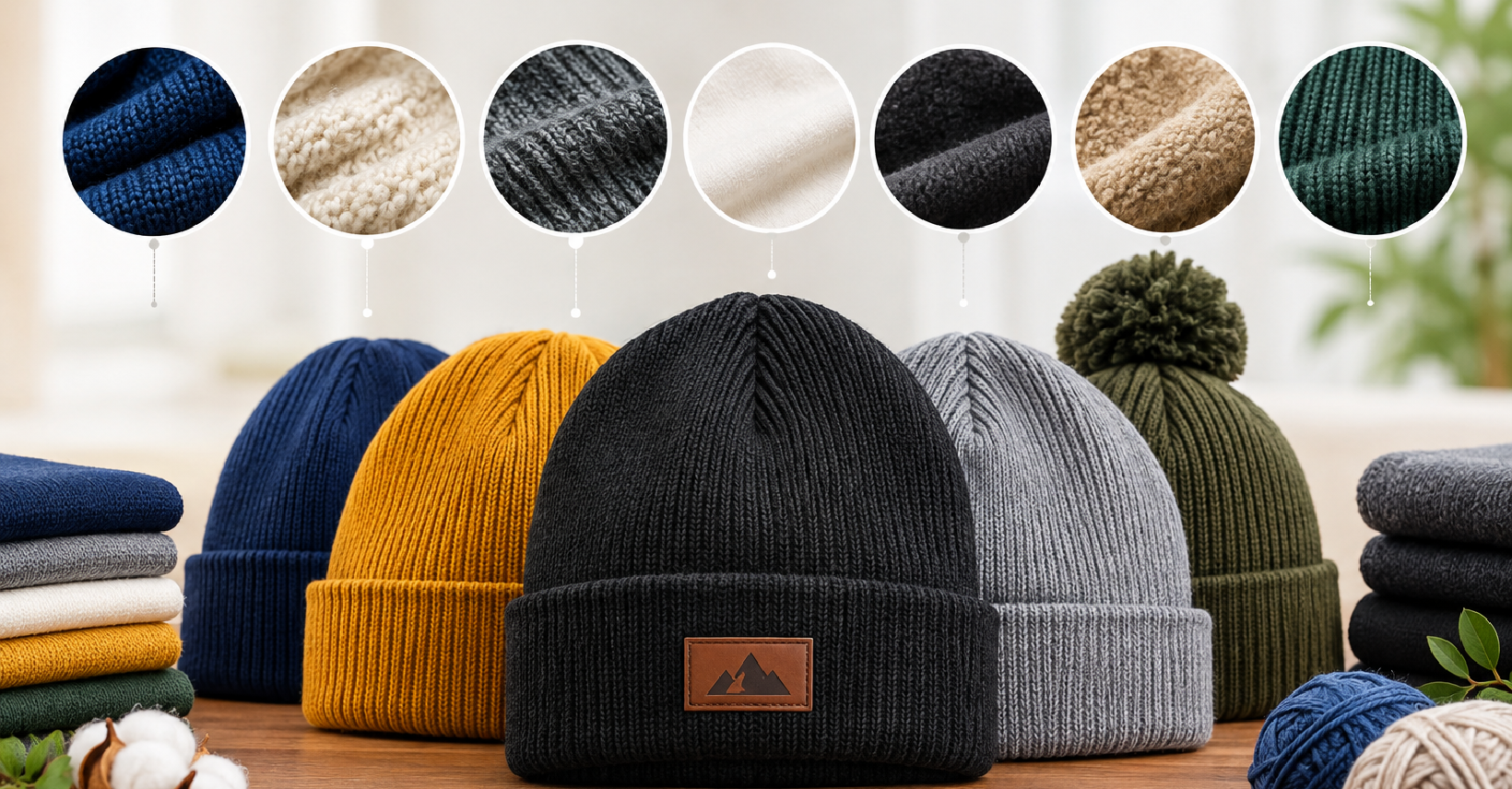
Choosing the best fabric for custom beanies is one of the most important decisions when creating branded winter headwear. The material affects how warm a beanie feels, how comfortable it is to wear, how well it holds its shape and how effectively it displays your logo. Whether you are developing a clothing collection, ordering promotional merchandise or creating branded accessories for your business, selecting the right material can make a significant difference to the finished product.
At Custom Cap UK, custom headwear can be an effective way for businesses and clothing brands to bring their identity into everyday fashion. However, a successful beanie needs more than an attractive colour and a recognisable logo. It should also suit the season, feel comfortable against the skin and match the expectations of the people who will wear it.
Different materials offer different advantages. Acrylic is often chosen for affordable, colourful beanies, wool is valued for natural insulation, cotton suits lighter everyday styles, and fleece can be useful for active or outdoor applications. Premium fibres such as merino wool and cashmere offer additional options for brands seeking a softer, more luxurious finish.
In this guide, we explain the best fabrics for custom beanies, compare their properties and explore how to select a material that fits your design, audience and budget.
Why Fabric Choice Matters for Custom Beanies
The fabric is the foundation of a beanie’s performance and appearance. Even when two beanies share the same shape, colour and design, they can feel completely different depending on their fibre composition and knitting construction.
A lightweight cotton beanie, for example, may suit a mild autumn day, while a thick wool blend may be more appropriate for colder winter conditions. A soft acrylic knit can work well for promotional merchandise, whereas a premium merino wool beanie may better suit an outdoor clothing brand.
Before choosing a fabric, consider the following factors.
Warmth and insulation
A beanie helps retain warmth by trapping air within its fibres and knitted structure. The amount of insulation depends on several factors, including fibre type, knit density, thickness and whether the beanie has an additional lining.
Wool and fleece are common options for cold-weather designs, while cotton is often more suitable for lighter styles and transitional seasons.
It is important to remember that fibre alone does not determine warmth. A thick, closely knitted acrylic beanie can feel warmer than a very lightweight wool design.
Comfort and softness
A beanie sits directly against the forehead, ears and scalp, so its texture matters. Rough fibres, stiff construction or uncomfortable seams can discourage customers from wearing it regularly.
If your beanies are intended for retail customers, everyday use or corporate gifts, choose a material that feels pleasant against the skin. Merino wool, fine acrylic and soft cotton blends may be worth considering, depending on the desired finish.
Durability and shape retention
Custom beanies should maintain their appearance through regular wear. Stretch recovery, resistance to pilling, colour retention and overall construction can all influence how long a product continues to look presentable.
Some materials may stretch or lose their shape if poorly constructed or incorrectly washed. Reviewing a physical sample can help you assess how the beanie feels and performs before committing to a larger order.
Branding and decoration
Your material choice can affect how the logo or label appears on the finished beanie. Direct embroidery, woven labels and embroidered patches each create a different look.
A folded cuff may provide a useful area for branding, while a fine-knit or slouchy design may suit a smaller label or a more subtle decoration.
The best approach is to select the material, knit construction and decoration method as parts of the same design.
1. Acrylic: A Versatile Choice for Custom Beanies
Acrylic is one of the most common materials used for knitted beanies. It is a synthetic fibre that can provide a wool-like appearance while offering a practical option for businesses, clothing brands and promotional merchandise.
For many projects, acrylic provides a useful balance between affordability, colour choice and everyday wearability.
Benefits of acrylic beanies
Acrylic is available in a wide variety of colours, making it useful for brands that need to match specific visual identities. It can be used for simple cuffed beanies, bold streetwear designs, team merchandise and seasonal promotional products.
Other potential benefits include:
- Broad colour availability: Useful for matching brand colours or creating seasonal collections.
- Accessible pricing: Often a practical option for larger promotional or merchandise orders.
- Lightweight construction: Suitable for beanies that need warmth without an especially heavy feel.
- Easy-care options: Many acrylic beanies can be machine washed according to their care labels.
- Versatile styling: Works with ribbed knits, folded cuffs, pom-poms and various other beanie designs.
Actual performance depends on yarn quality, knitting density and garment construction.
Potential drawbacks of acrylic
Acrylic is not automatically the best option for every beanie. Some lower-quality yarns may pill with repeated friction, and certain acrylic knits can feel less breathable than natural-fibre alternatives.
The texture also varies considerably. A well-made acrylic beanie may feel soft, while a cheaper version may feel rougher or less refined.
If you are developing a premium collection, compare several yarn options rather than choosing based on fibre composition alone.
Best uses for acrylic beanies
Acrylic is worth considering for:
- Promotional merchandise and giveaways
- Corporate winter gifts
- Sports club and team merchandise
- School and university accessories
- Everyday branded beanies
- Streetwear collections with a controlled budget
For businesses seeking versatile custom headwear, acrylic is a practical starting point. It is particularly useful when colour consistency and cost are important considerations.
2. Wool: A Natural Option for Cold Weather
Wool has long been used in cold-weather clothing because of its insulating properties. Wool fibres and knitted wool fabrics can trap air, helping the wearer retain warmth.
For custom beanies, wool can provide a natural texture and a traditional winter appearance that suits outdoor brands, premium accessories and cold-weather collections.
Benefits of wool beanies
Wool offers several useful characteristics:
- Natural insulation: Suitable for many cold-weather applications.
- Moisture management: Wool can absorb moisture vapour while maintaining useful insulating properties.
- Distinctive texture: Creates a natural appearance that works well with classic knitted designs.
- Seasonal appeal: Fits naturally into winter accessories and outdoor clothing collections.
Different wool types vary in softness, fibre structure and performance, so the exact material specification matters.
Potential drawbacks of wool
Some wool fabrics can feel itchy against sensitive skin, particularly when made with coarser fibres. Pure wool may also require more careful washing than certain synthetic alternatives.
Depending on the construction, wool beanies can be more expensive than basic acrylic versions. They may also shrink or become distorted if washed or dried incorrectly.
Check the care instructions and consider a wool blend if you want some of wool’s characteristics with a different balance of price, softness or durability.
Best uses for wool beanies
Wool is worth exploring for:
- Premium winter accessories
- Outdoor clothing brands
- Cold-weather workwear
- Traditional and heritage-inspired designs
- Higher-end branded gifts
- Retail collections focused on natural fibres
If your brand wants to communicate warmth, craftsmanship and a classic winter aesthetic, wool may be a suitable material to investigate.
3. Merino Wool: Softness for Premium Beanies
Merino wool comes from Merino sheep and is valued for its relatively fine fibres. Compared with many coarser wool options, it can offer a softer feel against the skin.
This makes merino wool an attractive option for premium beanies designed for everyday comfort, travel and outdoor activities.
Why choose merino wool?
Merino wool combines insulation with moisture management and breathability. Depending on the knit construction and weight, it can provide warmth without making a beanie feel excessively bulky.
Its finer texture may also make it more comfortable for people who find traditional wool irritating.
For a clothing brand, merino wool can support a more premium product position when the material quality, construction and finishing are consistent with that promise.
What to consider before ordering
Merino wool is generally more expensive than standard acrylic, so it may not be suitable for every promotional budget.
Care requirements also depend on the yarn and garment construction. Some merino beanies require gentle washing or hand washing, while others may have been designed for more convenient care.
If you plan to market a beanie specifically as merino wool, verify the fibre composition and make sure the product description accurately reflects the material used.
Best uses for merino wool beanies
Merino wool can be suitable for:
- Premium winter clothing collections
- Outdoor and travel accessories
- High-end corporate gifts
- Minimalist fashion brands
- Lightweight cold-weather headwear
- Customers who prioritise softness and comfort
For brands creating a higher-priced accessory, merino wool may provide a meaningful material difference rather than simply adding another decorative feature.
4. Cotton: A Comfortable Choice for Lighter Beanies
Cotton is a natural plant-based fibre known for its familiar, soft feel. In beanies, cotton is often used for lighter knitted designs that are suitable for mild weather, indoor wear and casual styling.
Cotton is not generally the first choice for a very warm winter beanie, but it can be useful when comfort and a lighter feel matter more than maximum insulation.
Benefits of cotton beanies
Cotton can offer:
- A familiar, soft feel against the skin
- Breathability suited to lighter everyday styles
- A natural-fibre option for brands with specific material preferences
- Versatility for casual and minimalist designs
- Potential compatibility with customers who prefer to avoid wool
The finished result depends on the yarn, knit density and whether cotton is blended with another fibre.
Limitations of cotton
Cotton generally provides less insulation than a thick wool knit designed for cold conditions. It can also absorb moisture and take longer to dry than many synthetic materials.
Pure cotton knitted fabrics may stretch or lose their shape if their construction does not provide enough recovery.
For a winter collection, consider whether a cotton blend or a heavier knit would better match your customers’ needs.
Best uses for cotton beanies
Cotton can be suitable for:
- Spring and autumn accessories
- Lightweight fashion beanies
- Indoor merchandise
- Minimalist lifestyle brands
- Casual everyday headwear
- Brands prioritising natural-fibre materials
Cotton works particularly well when you want a beanie that feels lighter and less focused on extreme cold-weather protection.
5. Organic Cotton: An Option for Sustainability-Focused Brands
Organic cotton is cotton grown under recognised organic agricultural standards. It can be relevant to brands that want to specify organic fibre content in their products.
However, choosing organic cotton does not automatically make a complete beanie environmentally friendly. The overall impact also depends on processing, dyeing, transport, product lifespan and other supply-chain factors.
Why consider organic cotton?
Organic cotton may appeal to brands developing collections around natural fibres or seeking a documented material specification.
It can provide a similar general wearing experience to conventional cotton, although softness, durability and stretch depend on the yarn and knitting construction.
If sustainability is part of your brand positioning, verify the material claims and any supporting certification before using them in marketing.
Questions to ask your supplier
Before choosing organic cotton, confirm:
- The exact fibre composition
- Whether the yarn or finished product is certified
- What the certification actually covers
- Available colours and knit styles
- Minimum order requirements
- Expected production and delivery timelines
Avoid describing a product as fully organic if only a portion of its material meets the relevant criteria.
Best uses for organic cotton beanies
Organic cotton may suit lifestyle brands, minimalist clothing labels and businesses that want to document their material choices clearly.
It is most valuable when the material forms part of a genuine product specification rather than being used only as a marketing phrase.
6. Polyester: A Practical Material for Performance Styles
Polyester is a synthetic fibre used in a wide range of clothing and accessories. In beanies, it can be used for lightweight designs, activewear-inspired products and certain technical constructions.
Its suitability depends on the type of yarn or fabric, the knit structure and the intended activity.
Benefits of polyester beanies
Polyester generally offers good durability and colour retention. It absorbs relatively little moisture compared with cotton and can dry quickly, although actual moisture management depends on the fabric design.
Potential benefits include:
- Useful durability for regular use
- Good colour retention in suitable constructions
- Quick-drying characteristics
- Compatibility with some performance-oriented designs
- Availability in blends and recycled forms
For outdoor or sports-related headwear, these properties may be useful when matched to the right construction.
Potential drawbacks
Polyester can feel more synthetic than natural fibres, depending on its quality and finish. It is not automatically breathable or moisture-wicking simply because it is polyester.
For example, a dense polyester knit may feel quite different from a lightweight technical fabric designed to move moisture away from the skin.
Choose the product based on its actual construction and intended use rather than the fibre name alone.
Best uses for polyester beanies
Polyester may suit:
- Sports and activewear collections
- Outdoor merchandise
- Lightweight performance headwear
- Team accessories
- Brands looking for durable synthetic options
If you are creating beanies for exercise or active outdoor use, ask for details about the fabric construction and moisture-management performance.
7. Fleece: Soft Warmth for Outdoor Beanies
Fleece is a soft fabric construction commonly made from polyester fibres. Unlike traditional knitted beanie yarns, fleece is often used as a fabric shell, a lining or a complete headwear material, depending on the design.
Its brushed surface traps air, helping create a warm and soft feel.
Benefits of fleece
Fleece can be useful when a beanie needs to provide warmth without excessive weight.
Its potential advantages include:
- A soft, comfortable interior
- Lightweight insulation
- Quick-drying characteristics in many polyester fleece fabrics
- Suitability for active and outdoor clothing
- Compatibility with lining-based designs
A fleece lining can make a knitted beanie feel warmer around the forehead and ears without substantially changing its exterior appearance.
What to consider
Fleece does not have the same look as a traditional ribbed knit. If your brand wants a classic cuffed beanie with visible knitted texture, fleece may be better used as an interior lining.
Some fleece fabrics can pill with repeated friction, and their warmth varies according to thickness, density and construction.
Consider how the fabric will perform during the intended activity before making a final choice.
Best uses for fleece beanies
Fleece is worth considering for:
- Outdoor workwear accessories
- Hiking and winter activity headwear
- Cold-weather team clothing
- Lined beanies
- Sports and practical winter merchandise
For customers who prioritise warmth and a soft interior, fleece can be a valuable option.
8. Cashmere: A Luxury Material for Exclusive Beanies
Cashmere is a fine natural fibre obtained from the undercoat of cashmere goats. It is known for its softness, lightness and premium feel.
For custom beanies, cashmere is usually better suited to luxury accessories than to low-cost promotional products.
Why brands choose cashmere
Cashmere can create a refined, soft and lightweight beanie that fits a premium retail position. It may appeal to customers seeking a luxurious winter accessory rather than a basic branded item.
Its softness can make it particularly attractive for minimalist designs where the material itself is an important part of the product’s appeal.
Limitations of cashmere
Cashmere is typically more expensive than acrylic, cotton and many standard wool options. Fine fibres also require appropriate care, and the garment’s durability depends on the quality of the fibre, the knit construction and how the beanie is used.
A lower-quality cashmere blend should not be presented as pure cashmere. Always confirm the precise fibre composition before making product claims.
Best uses for cashmere beanies
Cashmere may suit:
- Luxury fashion brands
- Premium winter accessories
- Executive gifts
- High-end retail collections
- Exclusive branded merchandise
For most bulk promotional projects, cashmere may be unnecessary. For a carefully positioned luxury product, however, it can help create a more distinctive customer experience.
9. Blended Fabrics: Combining Useful Properties
Not every custom beanie needs to be made from a single fibre. Blended yarns combine two or more fibres to balance characteristics such as softness, warmth, stretch recovery, durability and price.
The result depends on the blend ratio and the construction of the finished beanie.
Acrylic and wool blends
An acrylic-wool blend can combine the wool’s natural insulating properties with acrylic’s colour options and practical care characteristics.
This may provide a useful middle ground for brands seeking a warmer or more premium feel without choosing a fully wool product.
Check the percentage of each fibre and assess the finished sample, as blends vary significantly.
Cotton and synthetic blends
Cotton blended with polyester or another synthetic fibre can offer a balance of softness and shape retention.
These blends may suit lighter beanies intended for casual wear, although the exact performance depends on the fibre percentages and knitting construction.
Wool and nylon blends
Some wool products include nylon to help improve durability and resistance to wear. The effectiveness depends on the blend and the design.
This can be worth investigating for beanies that need to balance a natural wool feel with regular use.
How to choose a blend
Start by identifying the main product requirement. If softness is the priority, focus on the feel of the finished yarn. If durability matters most, evaluate stretch recovery and resistance to pilling. If budget is the main constraint, compare the complete specification rather than relying only on the fibre name.
A blended fabric is useful when it solves a specific product challenge, not simply because it contains more than one material.
10. Recycled Fibres for Custom Beanies
Brands exploring material alternatives may consider recycled polyester or recycled acrylic, depending on availability and the product requirements.
Recycled fibres can help incorporate recovered material into a product, but environmental benefits depend on the material source, production process and verified content.
Recycled polyester
Recycled polyester is often made from recovered polyester material, which may include post-consumer plastic bottles or other suitable feedstock.
Its performance can be comparable to conventional polyester when the yarn and construction are appropriately specified.
For custom beanies, recycled polyester may suit performance-inspired collections, branded merchandise and businesses with documented recycled-material requirements.
Recycled acrylic
Recycled acrylic may be available for certain knitted products. It can offer a way to specify recycled content while retaining characteristics associated with acrylic yarn.
However, availability, quality, colours and minimum order quantities can vary.
Verify sustainability claims
Before marketing a beanie as recycled, confirm the actual fibre percentage and any relevant supporting documentation. A product containing some recycled material should not be described as entirely recycled unless that claim is accurate.
It is also useful to consider product longevity. A durable beanie that customers wear for several seasons may provide more value than one that quickly loses its shape or appeal.
11. Which Fabric Is Best for Different Beanie Styles?
The best fabric depends on the beanie style you intend to create. Matching the material to the design can improve both appearance and usability.
Cuffed beanies
Cuffed beanies feature a folded section around the lower edge. The fold creates a thicker area around the forehead and ears and provides a convenient position for a logo.
Acrylic, wool blends and other suitable knitted yarns can work well for this style.
For businesses and clothing brands, the cuff may be suitable for direct embroidery, a woven label or an appropriate patch.
Slouchy beanies
Slouchy beanies have a longer shape that sits loosely at the back of the head. They can suit streetwear brands, casual collections and customers who prefer a relaxed silhouette.
Lighter acrylic, cotton blends and selected wool blends may work depending on the intended drape.
The material should have the right combination of flexibility and shape retention so that the beanie looks relaxed without becoming excessively stretched.
Fisherman beanies
Fisherman-style beanies are generally shorter and sit closer to the head, often with a compact folded cuff.
Acrylic and wool blends may suit this style because they can provide a defined knitted structure. The appropriate choice depends on whether you want a lightweight fashion accessory or a warmer winter design.
Keep the branding proportionate to the smaller cuff area.
Chunky knit beanies
Chunky knit beanies use thicker yarns or a more pronounced knit structure to create a substantial texture.
Wool, acrylic and suitable blended yarns can all be considered. The final warmth and weight depend on the construction as well as the fibre.
Because the texture is visually prominent, simple logos and labels may work better than intricate designs.
Performance beanies
Performance beanies are intended for activities such as walking, running or outdoor work. Depending on the environment, lightweight polyester blends, technical knits or fleece-lined constructions may be appropriate.
Think about moisture management, breathability, warmth and fit before choosing the material.
A beanie designed for vigorous activity may require a different specification from one intended for standing outdoors in cold conditions.
12. How Fabric Choice Affects Custom Embroidery
For brands ordering custom beanies, fabric selection should be considered alongside the decoration method. Knitted materials stretch and move differently from the woven fabrics used on many traditional caps.
This means that embroidery and logo placement require careful planning.
Direct embroidery on knitted beanies
Direct embroidery can create a durable, premium-looking logo, especially on suitable cuffed beanies.
However, knit fabric stretches, and dense stitching may affect its appearance. The outcome depends on the yarn, knit density, logo size, stabilisation and embroidery technique.
Before approving the design, confirm that the chosen construction is suitable for the intended embroidery.
Woven labels for detailed logos
Woven labels can be useful when your logo contains small lettering or fine details that may be difficult to reproduce directly on a knitted surface.
A label can be attached to the cuff or another suitable position, creating a clean branding area.
This approach can also suit minimalist clothing brands that want a subtle, label-focused finish.
Embroidered patches
An embroidered patch can provide a defined area for branding and a textured appearance. It may be appropriate for some chunky-knit, slouchy or streetwear-inspired beanies.
The patch attachment method should suit the beanie’s construction. A suitable sample helps confirm that the patch sits correctly and does not make the fabric uncomfortable.
Match the design to the material
Fine details, very small lettering and complex graphics may need to be simplified for knitted headwear.
Before production, review the logo at its intended size and check how the decoration interacts with the fabric. The objective is to create a logo that looks clear without compromising the comfort or flexibility of the beanie.
13. How to Choose the Best Fabric for Your Brand
With several materials available, the most effective way to choose is to work through your requirements in a logical order.
Step 1: Identify your target audience
Think about who will wear the beanies and what they expect from them.
A fashion customer may care about texture and appearance, while an outdoor worker may prioritise warmth and practicality. Corporate buyers may need a balance of comfort, price and consistent branding.
Step 2: Decide when the beanie will be worn
Consider the expected season and conditions.
For colder weather, investigate suitable wool blends, thicker acrylic knits or fleece-lined designs. For mild conditions, cotton blends or lighter knits may be more appropriate.
The right choice depends on the complete construction rather than fibre composition alone.
Step 3: Set a realistic budget
Establish a target cost before comparing materials. Acrylic may suit cost-conscious orders, while merino wool and cashmere are generally more appropriate for premium products.
Remember to consider the full specification, including the cap style, branding, packaging and quantity.
Step 4: Choose your branding method
Decide whether the design will use direct embroidery, a woven label, an embroidered patch or another suitable decoration.
Your choice may influence which knit construction is most appropriate. Ask your supplier to confirm compatibility before finalising the design.
Step 5: Review a sample
Whenever possible, inspect a physical sample before approving a larger production run.
Check softness, weight, stretch, recovery, colour, construction and the finished branding. Try the beanie on to assess fit and comfort.
Step 6: Confirm the specification
Once the sample meets your requirements, record the important details, including fibre composition, colour, knit style, size, decoration method and logo placement.
A clear specification helps support consistency if you reorder the same design later.
14. Common Mistakes to Avoid When Selecting Beanie Fabrics
Choosing a material based only on appearance or price can create problems later. Here are several mistakes worth avoiding.
Choosing warmth without considering comfort
A very thick beanie may provide insulation but feel too heavy for customers who prefer lightweight accessories.
Consider the intended activity and climate rather than assuming that the thickest material is always the best.
Selecting a premium fibre without a clear reason
Expensive materials can be valuable when softness, natural fibre content or luxury positioning matters. However, they may not offer enough additional value for a low-cost giveaway.
Match the material to the customer’s expectations and your product’s intended price point.
Ignoring the knit construction
Two beanies made from the same fibre can feel and perform differently because of yarn quality, stitch structure and density.
Always evaluate the finished product rather than treating the material name as a complete quality indicator.
Overlooking care requirements
Some beanies require gentler washing than others. If your customers expect convenient care, check the washing instructions before selecting the final material.
Make sure any care information you publish accurately reflects the finished product.
Approving embroidery without testing it
Stretchy knitted materials may distort if the logo is too dense or poorly stabilised.
Review the decoration on the intended construction before approving production.
Making unsupported sustainability claims
Terms such as organic, recycled and sustainable should be supported by accurate material information and suitable documentation.
Confirm what the claim covers before including it in your product descriptions or marketing.
15. Why CustomCap.uk Is a Useful Starting Point for Custom Headwear
Developing a custom beanie involves more than selecting a fibre. The style, fit, knit construction, colour and branding all need to work together to create a product that suits your business.
At Custom Cap UK, businesses and clothing brands can begin exploring custom headwear options and plan a design around their brand identity and intended audience.
When preparing a custom beanie enquiry, consider sharing:
- Your logo or artwork
- Your preferred beanie style
- The material or feel you want to achieve
- Your preferred colours
- The decoration method you are considering
- Your expected order quantity
- Your intended use, such as retail, workwear or promotional merchandise
You do not need to know every technical detail before beginning. If you know the desired look and purpose, a supplier can help you clarify the material and construction requirements.
Before confirming a larger order, ask about available yarn compositions, sample options, decoration compatibility and care instructions. This will help you make a decision based on the finished product rather than appearance alone.
Conclusion: Choose a Beanie Fabric That Fits Your Brand
The best fabrics for custom beanies are those that suit the product’s purpose, the people wearing it and the design you want to create.
Acrylic is a versatile choice for many promotional and everyday beanies. Wool provides natural insulation and a classic winter feel, while merino wool offers a softer option for premium collections. Cotton suits lighter styles, polyester can work well in selected performance designs, and fleece provides a soft construction for warm linings and outdoor applications. Cashmere and carefully specified blended or recycled fibres offer additional possibilities for particular product requirements.
There is no single material that is best for every project. The right choice depends on warmth, comfort, durability, budget, appearance and branding requirements.
For the best results, consider the fibre and knit construction together, choose a decoration method suited to the material and review a physical sample whenever possible.
With a clear design brief and careful material selection, Custom Cap UK can be the starting point for developing custom headwear that looks professional, feels comfortable and gives customers a reason to wear it.
Whether you are creating winter merchandise, branded gifts or a new clothing collection, choosing the right beanie fabric is an important step towards making your design a success.